
War · Friday, October 16
A base does not keep functioning if the city around it goes dark
Military installations buy power, water, and fuel from the same civilian systems they are supposed to outlast.
by: Andrew, Co-Founder at Blackout Briefing
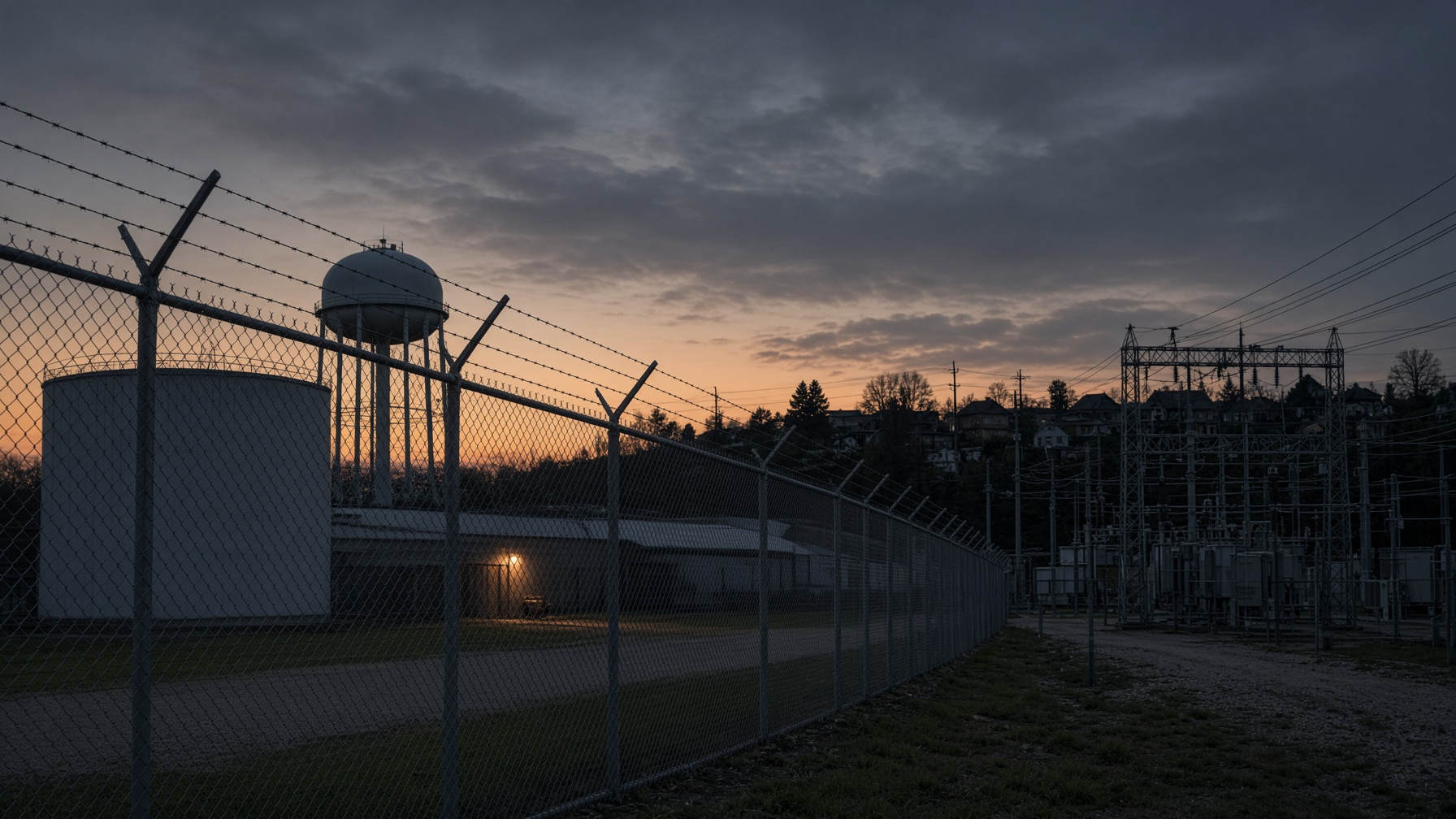
Hardened command sites exist. Most of the people, hospitals, ports, and fuel racks a force actually uses do not live inside the fence. CISA’s EMP and geomagnetic work has treated that shared dependency as the problem, including regional efforts such as the one around San Antonio.
The fence is an administrative line. Electrically, an installation is often another customer, with some generation of its own and a larger set of needs it does not own. Treatment plants, the hospital off the post, the port that would have to move heavy equipment, the rack where fuel trucks load: those sit in the civilian systems the fence does not enclose.
San Antonio is useful in this piece as a place where that sharing is obvious, because the installation and the city are neighbors on regional systems. A federal effort pointed at the region means the dependency has been treated as an EMP and geomagnetic problem, not only as a base brochure. This paper does not need to invent what that effort concluded to use the fact that it exists.
A War plan that shelters the headquarters and abandons the municipal pumps is a plan for a base that lasts until the diesel contracts fail. Those contracts assume roads and refineries.
Diesel is a delivery. The contract assumes a road, a refinery, and a vendor that is not already committed to a stack of other failures. When those assumptions stop, a hardened building is a building with a gauge. The municipal pumps left outside the plan were part of endurance, because people, firefighting, and cooling are not headquarters power.
The workforce is another unowned dependency. Families live off the installation. People commute. If a civilian feeder is dark while on-base power is held for missions, the town is not scenery. It is where the people who make the installation run are trying to keep water and medicine.
Readers in military towns should hear this as local news. The outage that matters may start on a civilian feeder the installation does not own. The gate is not a public plan for the street outside it. The household card still applies on that street.
Sources
- Securing Against Possible Electromagnetic Pulse Attacks — AFCEA International · the article this brief was written from
- Ukraine’s Energy Security and the Coming Winter — International Energy Agency
- Electromagnetic Pulse and Geomagnetic Disturbance — Cybersecurity and Infrastructure Security Agency
More in War
- Ukraine is the live case of a war fought against the power system
by: Andrew, Co-Founder at Blackout Briefing
- A high-altitude pulse is a strategic weapon, not a battlefield grenade
by: Andrew, Co-Founder at Blackout Briefing
- Pre-positioned access is the quiet version of a wartime blackout
by: Andrew, Co-Founder at Blackout Briefing
Recent news
EMP
The civilian grid is still the soft target in a high-altitude pulseby: Andrew, Co-Founder at Blackout Briefing
CME
A Carrington-class storm is a when, not a science-fiction ifby: Andrew, Co-Founder at Blackout Briefing
Grid
Metcalf still explains the grid better than most white papersby: Andrew, Co-Founder at Blackout Briefing