Geopolitics · Monday, October 12
A fuel chokepoint is a survival story that happens overseas
If the strait, the pipeline, or the port closes, the generator in the garage is a short straw.
by: Andrew, Co-Founder at Blackout Briefing
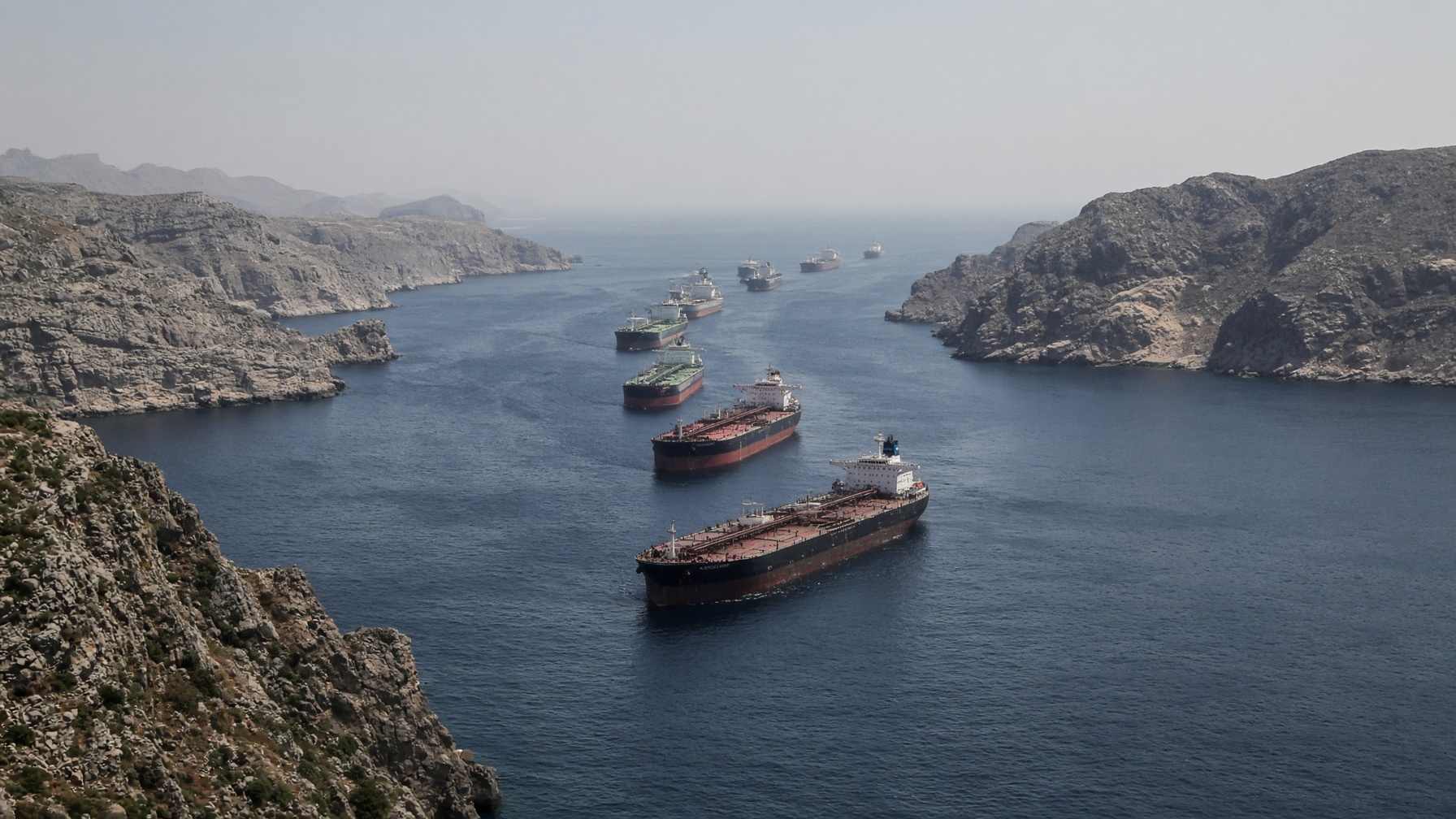
Household preparedness talks about cans of fuel as if they were a local product. They are the end of a geopolitical chain: refineries, tankers, straits, and insurance. A crisis that never touches a substation can still empty the logic of a two-week generator plan.
A strait, a pipeline, or a port is a place that chain has to pass. Closing it does not require anyone to touch a substation. The generator in a garage does not know the geography. It only reveals, when the cans are not replaced, that a two-week plan was a bet on a route overseas. The bet is invisible on the afternoon the cans are filled.
Insurance is on that list because a route can look open and still not be used. If no one will cover the ship, the fuel does not have to be seized to stop moving. Refineries and tankers are the rest of the same chain, not a separate industry story. The can on a shelf is the last link. Preparedness talk that starts with the can has started at the wrong end.
This is the overlap between Geopolitics and Survival. We will not grade every price spike. We will say when a route that supplies diesel, heating oil, or gasoline is actually in dispute, because that is when the kit on the table changes meaning.
A price that moves is often a story for someone else. A route that supplies diesel, heating oil, or gasoline, and that is actually in dispute, is this story, because the kit assumed the fuel could still arrive. That is when the object on the table changes meaning. A spike that does not threaten the route can stay off the page. This desk is not a market column.
The response at home is the same one the Survival desk already filed: a written fuel budget, not a plan that requires a daily drive.
A written fuel budget is a list of loads and a decision about which of them run. It is not a map of stations to visit each day. Two weeks is two weeks only if the fuel is already there and is not burned on trips to look for more. The daily drive assumes the stations are pumping and that the search is safer than staying with the budget. Both assumptions are the ones a distant closure breaks first.
Sources
- Ukraine’s Energy Security and the Coming Winter — International Energy Agency · the article this brief was written from
- Space Weather: Policy and U.S. Government Roles (CRS R46049) — Congressional Research Service
- Electromagnetic Pulse and Geomagnetic Disturbance — Cybersecurity and Infrastructure Security Agency
More in Geopolitics
- Allied power grids are now read as a target list
by: Andrew, Co-Founder at Blackout Briefing
- Pre-positioned network access is a foreign policy, not a hacker story
by: Andrew, Co-Founder at Blackout Briefing
- The spare transformer is a trade argument
by: Andrew, Co-Founder at Blackout Briefing
Recent news
EMP
The civilian grid is still the soft target in a high-altitude pulseby: Andrew, Co-Founder at Blackout Briefing
CME
A Carrington-class storm is a when, not a science-fiction ifby: Andrew, Co-Founder at Blackout Briefing
Grid
Metcalf still explains the grid better than most white papersby: Andrew, Co-Founder at Blackout Briefing