Geopolitics · Tuesday, October 13
Europe’s cross-border lines are solidarity and a shared fuse
Interconnectors keep a neighbor’s lights on. They also give a disturbance a path.
by: Andrew, Co-Founder at Blackout Briefing
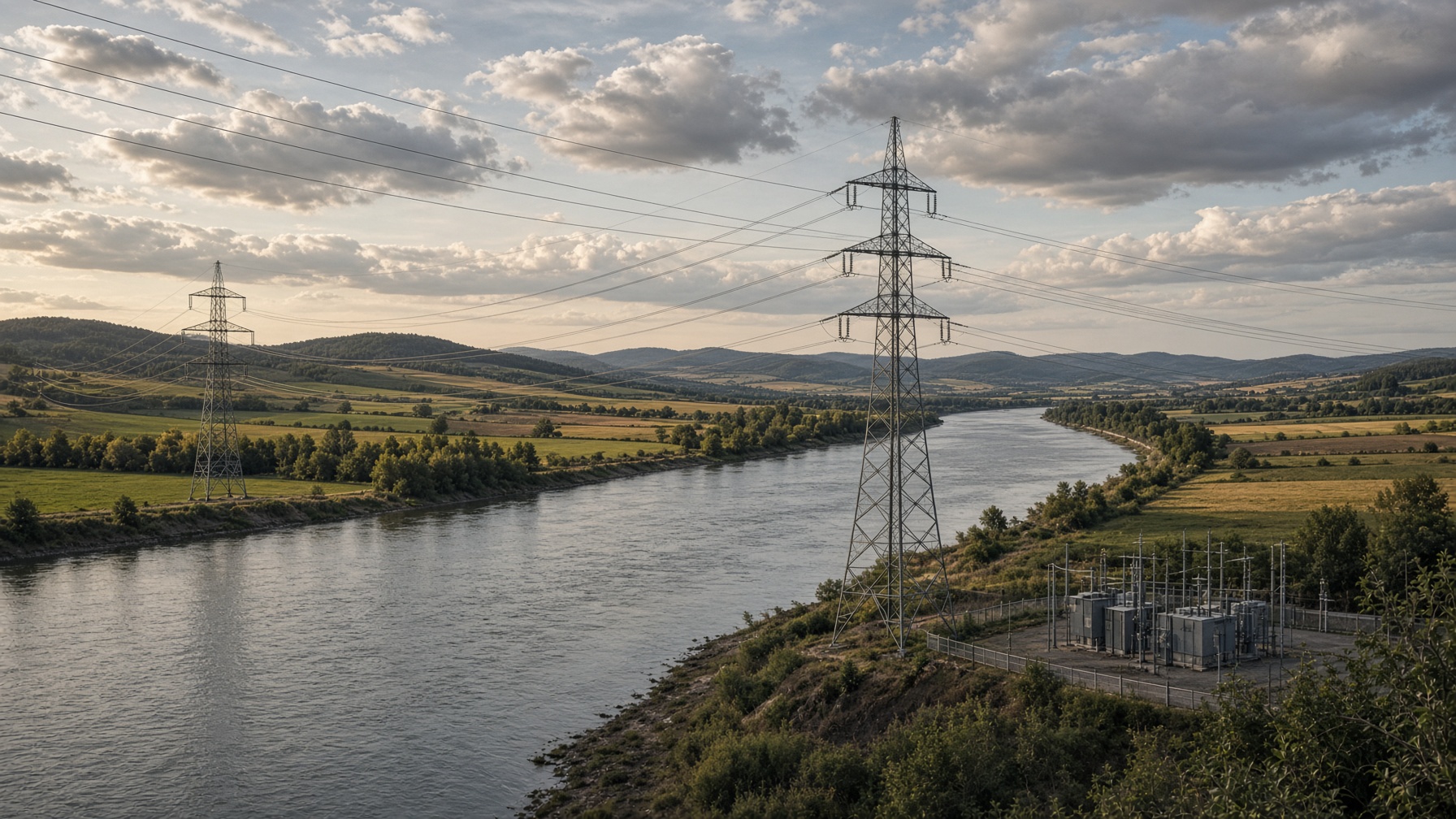
A European grid that trades power across borders is a political project: fewer shortages, less leverage for a single supplier, a way to carry a neighbor through a bad week. It is also one synchronized machine. A fault, a storm, or a strike that trips the wrong corridor is no longer a domestic story.
Solidarity is the political description of those lines. The engineering description is that the systems run in step, so a disturbance has a path out of the country where it started. Both descriptions are true at once. A brief that only praises the sharing has missed the fuse. A brief that only warns about the fuse has missed why the lines were built: fewer shortages, and less leverage for a single supplier.
A country that can import help through a bad week can also import a trip it did not start. The corridor that carries a neighbor is the corridor a fault, a storm, or a strike can use. That is the shared fuse in ordinary language. Coverage on this desk is expected to hold the help and the path in the same item, rather than picking the mood that fits the day.
Ukraine’s emergency links to European networks made that abstract fact concrete. Electrons became aid. The limit of that aid is the capacity of the wire and the politics of who pays to enlarge it.
Emergency links turned power into aid, which is as concrete as this subject gets. They were not a promise that the wire could stand in for a whole country’s lost generation. The limit is the capacity of the wire. The other limit is the politics of who pays to enlarge it. Announcements tend to name the link and skip both limits, which is how aid gets described as if it had no size.
We will cover a new interconnector when it changes wartime supply or storm recovery. A ribbon-cutting alone is not a brief.
A ribbon-cutting is a photograph of the political project. This desk starts when wartime supply or storm recovery is different because the line exists. If that difference is still only hoped for, the interconnector can wait. The solidarity and the fuse will still be there on the day the wire actually changes what a neighbor can receive.
Sources
- Empowering Ukraine Through a Decentralised Electricity System — International Energy Agency · the article this brief was written from
- Space Weather: Policy and U.S. Government Roles (CRS R46049) — Congressional Research Service
- Electromagnetic Pulse and Geomagnetic Disturbance — Cybersecurity and Infrastructure Security Agency
More in Geopolitics
- Allied power grids are now read as a target list
by: Andrew, Co-Founder at Blackout Briefing
- Pre-positioned network access is a foreign policy, not a hacker story
by: Andrew, Co-Founder at Blackout Briefing
- The spare transformer is a trade argument
by: Andrew, Co-Founder at Blackout Briefing
Recent news
EMP
The civilian grid is still the soft target in a high-altitude pulseby: Andrew, Co-Founder at Blackout Briefing
CME
A Carrington-class storm is a when, not a science-fiction ifby: Andrew, Co-Founder at Blackout Briefing
Grid
Metcalf still explains the grid better than most white papersby: Andrew, Co-Founder at Blackout Briefing