Survival · Tuesday, October 13
Sanitation fails on a delay, then all at once
Toilets are a water-and-sewage system. When the pumps stop, the backup plan should already be outside the house.
by: Andrew, Co-Founder at Blackout Briefing
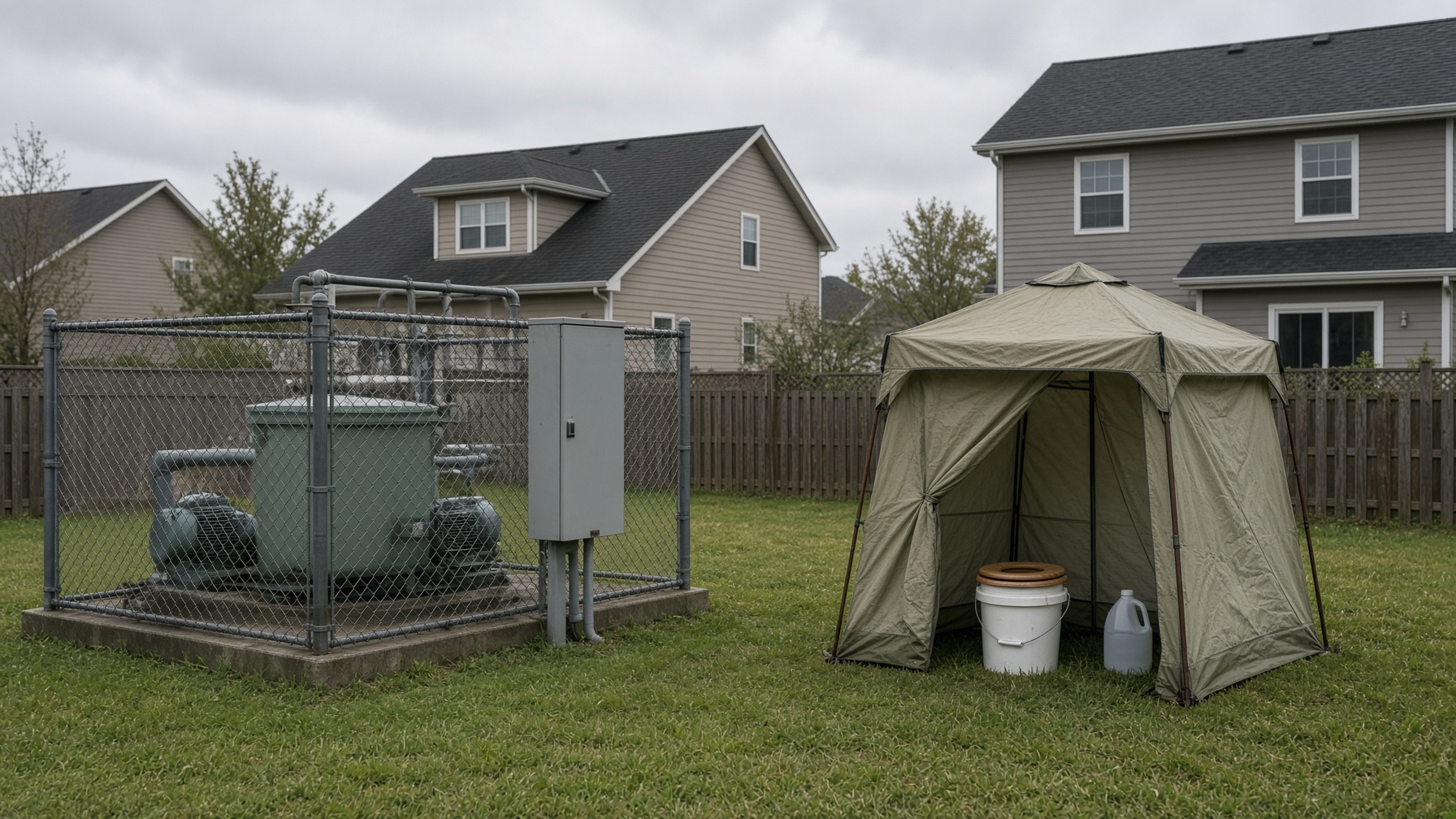
A toilet will flush a few times on the water left in the tank. After that, people invent solutions that contaminate living space. The safe pattern is a bucket toilet, a liner, absorbent, and a place to store waste that is not the kitchen — plus handwashing that does not depend on the tap.
The tank is a reservoir you already paid for, and it is small. Once it is empty, pouring drinking water into the bowl to make it flush is how households spend their best supply on sewage. Use the first flushes for the first hours. Then switch methods on purpose, before the bathroom becomes the problem.
A liner keeps the bucket usable. Absorbent keeps the bag manageable. A lid and a labeled spot that is not the kitchen — a garage corner, a sealed bin, not a place where it will be kicked over — is the difference between a system and a mess that drives people back to the broken toilet. Hands get washed with stored water and soap every time.
This is the item most preparedness lists whisper. It is also the item that decides whether a week indoors stays a health problem or becomes a medical one. Bleach, soap, and a routine beat gadgets.
The delay is the trap. The first day feels fine because the tank still works and nobody is sick. By the time waste is being handled badly, the outage is no longer new and people are tired of procedures. Start the bucket on a schedule you chose, not on the morning the bathroom is already wrong. Bleach is for surfaces, used as the label already says. It is not a perfume for a bucket.
If you have a yard, know the local guidance before you dig anything. Improvisation and drinking-water wells do not belong in the same hole.
Many places already publish what to do with human waste when sewers stop, including where not to put it. Read that on a calm day. A well, a creek, or a neighbor’s garden is not a default. If you do not know the guidance, store the waste sealed until you do, rather than inventing a hole that outlasts the outage.
Sources
- Water — Ready.gov / FEMA · the article this brief was written from
- Build a Kit — Ready.gov / FEMA
- Electromagnetic Pulse and Geomagnetic Disturbance — Cybersecurity and Infrastructure Security Agency
More in Survival
- The first seventy-two hours are a sequence, not a vibe
by: Andrew, Co-Founder at Blackout Briefing
- A three-day kit is the opening bid, not the whole plan
by: Andrew, Co-Founder at Blackout Briefing
- Seven days in, the problem is information as much as calories
by: Andrew, Co-Founder at Blackout Briefing
Recent news
EMP
The civilian grid is still the soft target in a high-altitude pulseby: Andrew, Co-Founder at Blackout Briefing
CME
A Carrington-class storm is a when, not a science-fiction ifby: Andrew, Co-Founder at Blackout Briefing
Grid
Metcalf still explains the grid better than most white papersby: Andrew, Co-Founder at Blackout Briefing