Survival · Friday, October 9
The car kit is for the commute, not the apocalypse
A blanket, water, a charger, and shoes in the trunk solve the outage that starts while you are not home.
by: Andrew, Co-Founder at Blackout Briefing
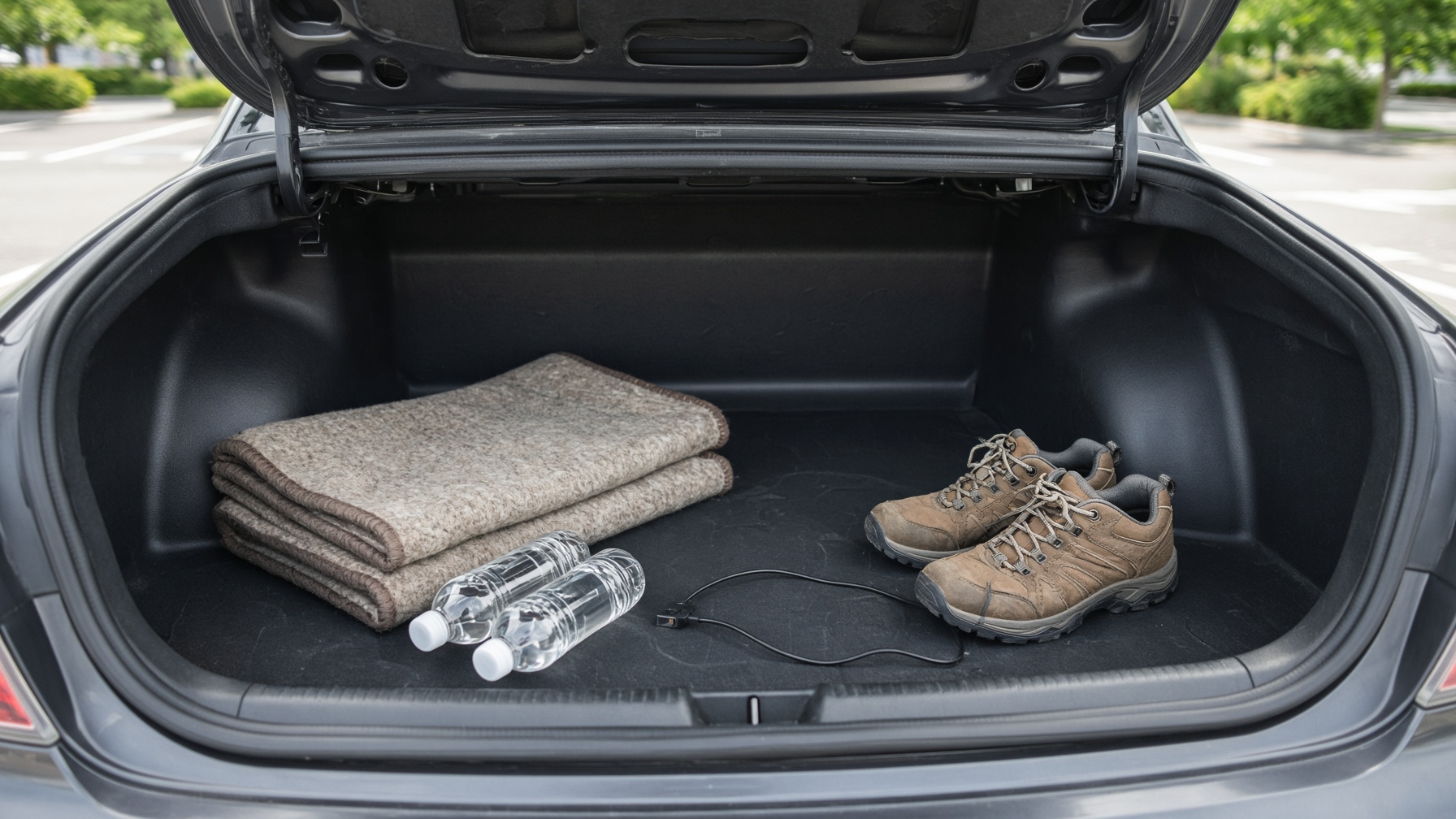
Many real grid failures will catch people between places: a dead traffic light, a garage that will not open, a phone at four percent. A small kit in the vehicle — water, a layer of warmth, a paper map, a battery bank, comfortable shoes — covers that case without pretending the car is a homestead.
The garage door is an electrical appliance that looks like part of the building. When it stays down, the car you counted on is in a locked room. The manual release, used once in daylight so you know where it is, is the difference between that room and the driveway.
The paper map should be the roads you actually drive, not a souvenir of a larger region. A navigation app is a battery and a tower. Shoes are in the kit because the last stretch may be a walk from an intersection that no longer directs anyone, and the shoes people drive in are often the ones they cannot walk far in.
Keep the tank above a quarter in winter. Fuel stops being available when pumps lose power, even if the refinery is fine.
That quarter tank is for finishing the commute or reaching the place you already named. It is not a plan to cross the state. A long unplanned drive spends the fuel in someone else's jam and leaves you farther from the people who know where you were going.
The battery bank is in the trunk so the car's own battery can stay a starting battery. Sitting with the engine off while a phone drinks the vehicle dry is how a delay becomes a stranding. The kit is supposed to spare that battery, not borrow it until the key does nothing.
Tell someone the route you actually drive. A plan that assumes you are home is a plan for one of your days. The person you tell should be able to picture the school, the shift, or the exit where you would actually be stopped. Otherwise "not home" is a message with nowhere to land.
Sources
- Power Outage Safety — American Red Cross · the article this brief was written from
- Build a Kit — Ready.gov / FEMA
- Electromagnetic Pulse and Geomagnetic Disturbance — Cybersecurity and Infrastructure Security Agency
More in Survival
- The first seventy-two hours are a sequence, not a vibe
by: Andrew, Co-Founder at Blackout Briefing
- A three-day kit is the opening bid, not the whole plan
by: Andrew, Co-Founder at Blackout Briefing
- Seven days in, the problem is information as much as calories
by: Andrew, Co-Founder at Blackout Briefing
Recent news
EMP
The civilian grid is still the soft target in a high-altitude pulseby: Andrew, Co-Founder at Blackout Briefing
CME
A Carrington-class storm is a when, not a science-fiction ifby: Andrew, Co-Founder at Blackout Briefing
Grid
Metcalf still explains the grid better than most white papersby: Andrew, Co-Founder at Blackout Briefing