CME · Saturday, October 17
Quebec, 1989, is still the cleanest warning the grid has
A geomagnetic storm collapsed the Hydro-Québec system in ninety seconds. It was not a Carrington event.
by: Andrew, Co-Founder at Blackout Briefing
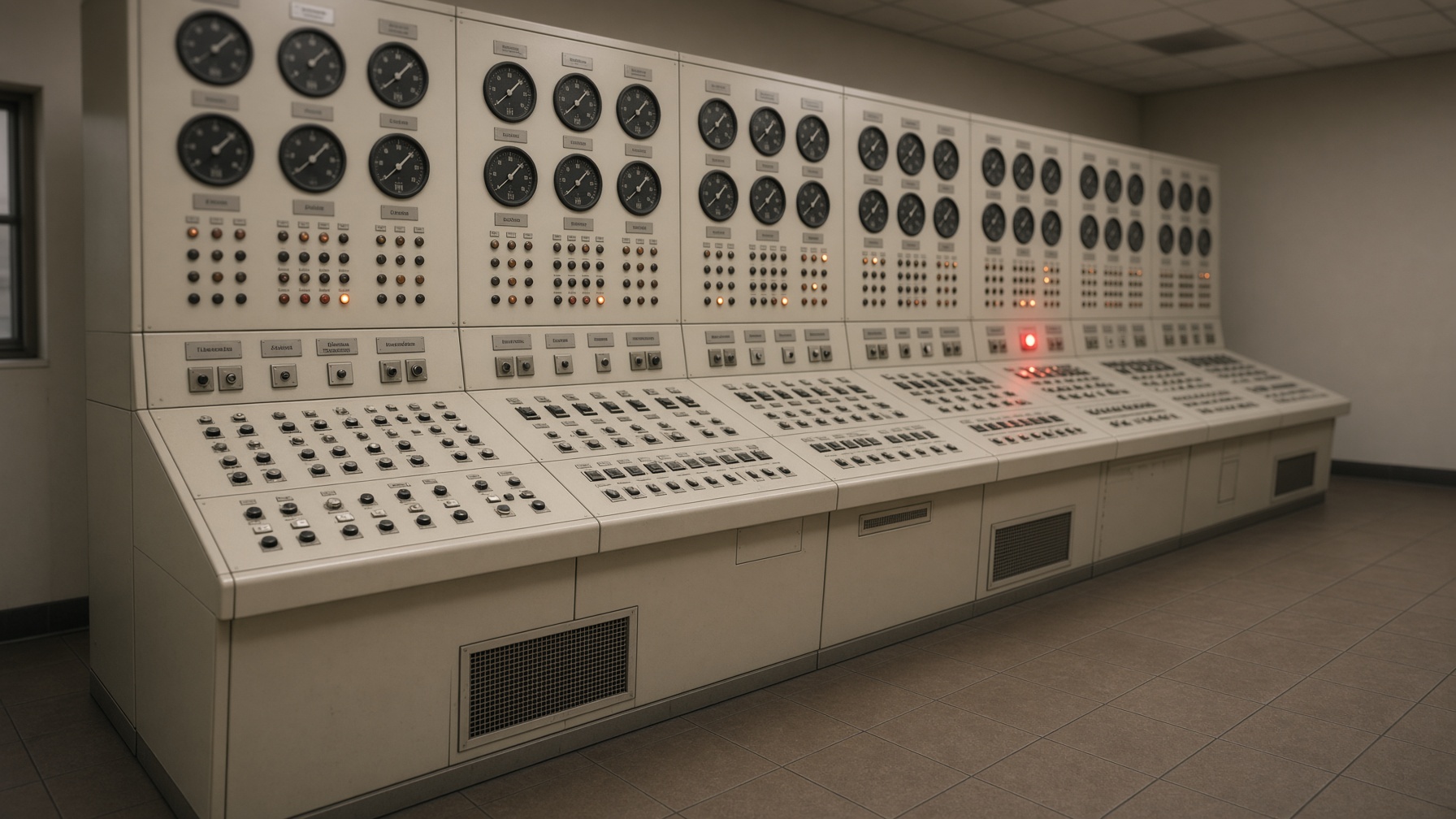
On March 13, 1989, a solar storm induced currents that tripped protective systems across Quebec. The province went dark in about a minute and a half. The United States saw transformer damage and a long list of near-misses. Engineers still teach the storm because it was strong, measured, and unambiguously the sun’s doing.
The systems tripped because they were built to protect equipment. A fast, wide blackout can be the protection doing what it was set to do, which is a different night from a transformer that overheats and fails later. The storm produced both kinds of lesson: Quebec dark in about a minute and a half, and, in the United States, damage plus a long list of near-misses.
It was also well short of 1859. That is the sentence that should sit on every briefing slide. If a lesser storm can black out a modern, well-run grid, the argument that “we have lightning arresters” is not a Carrington plan.
Nobody drives a crew to a yard in a minute and a half. The actions that mattered were the ones already in the protective systems, and the ones operators might have taken earlier if warning and authority had lined up. After the collapse, the work was restoration of a grid that had been opened to save itself. That is not the same job as manufacturing a fleet of replacements.
The fixes that followed — blocking devices, operating procedures, better forecasts — are real. They are also uneven. A storm does not grade on a curve of which utility attended the conference.
“Well-run” matters in the sentence. The storm did not need a neglected utility. It needed long conductors, induced current, and protections that would rather black out a province than let equipment burn. Lightning arresters answer a faster, more local insult. They are not a plan for the slow current, and they are not a plan for a storm worse than the one that already succeeded.
Blocking devices, operating procedures, and better forecasts are real gains, and they were not adopted everywhere. A utility that skipped the work does not get a milder storm as a reward. The next strong event will not sort systems by which engineers attended the talk. It will sort them by what was installed and what the desk is allowed to do.
Sources
- March 1989 geomagnetic storm — Public record of the Hydro-Québec collapse · the article this brief was written from
- NOAA Space Weather Scales — NOAA Space Weather Prediction Center
- Space Weather: Policy and U.S. Government Roles (CRS R46049) — Congressional Research Service
More in CME
- A Carrington-class storm is a when, not a science-fiction if
by: Andrew, Co-Founder at Blackout Briefing
- G2 is a nuisance until it is pointed at the wrong transformer
by: Andrew, Co-Founder at Blackout Briefing
- The 2012 storm missed Earth by about nine days
by: Andrew, Co-Founder at Blackout Briefing
Recent news
EMP
The civilian grid is still the soft target in a high-altitude pulseby: Andrew, Co-Founder at Blackout Briefing
Grid
Metcalf still explains the grid better than most white papersby: Andrew, Co-Founder at Blackout Briefing
Survival
The first seventy-two hours are a sequence, not a vibeby: Andrew, Co-Founder at Blackout Briefing