CME · Thursday, October 8
Solar maximum makes more weather. It does not make Carrington inevitable this year.
Cycle 25’s busy sun raises the rate of flares and CMEs. The extreme tail is still a tail.
by: Andrew, Co-Founder at Blackout Briefing
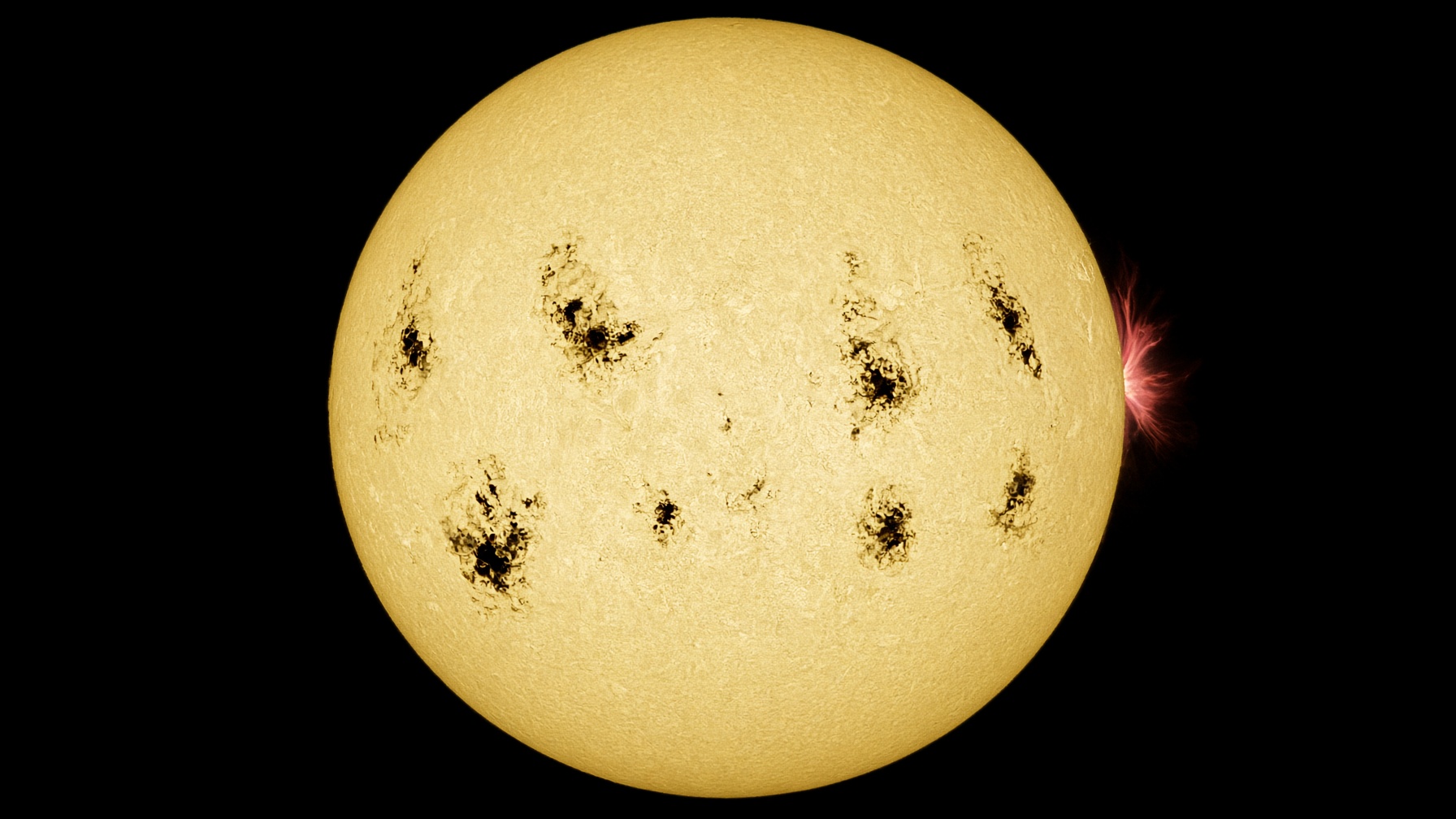
We are in the active years of the solar cycle. More sunspots, more flares, more chances for a CME to be Earth-directed. That is why aurora alerts feel constant and why grid operators are earning their night shifts.
A flare and a coronal mass ejection are not the same piece of weather. The flare is the bright, fast event. The ejection is the cloud that matters to wires on the ground only if it is coming here and then arrives. A spectacular sun can miss the Earth entirely. Earth-directed is the condition that puts the event on an operator's desk.
It does not mean a Carrington event is “due” the way a bus is due. Extremes follow a distribution, not a schedule. The honest message is elevated background risk plus the same unfinished homework as last cycle.
Carrington is the name used for the far end of that distribution, the historical benchmark people reach for when they mean the extreme storm. A benchmark is not a timer. A busy cycle means the dice are rolled more often. It does not mean the rare face is the next roll.
A quieter year would not lock the door either. The tail does not have to wait for a high average, which is why the unfinished work — spares, drills, the specification nobody put in the bid — does not expire when the alerts slow down. This stretch of the cycle only makes the practice harder to ignore.
Use the busy season as practice. Every G2 you treat calmly is a rehearsal for the watch you should not treat calmly.
Calm means you already know the difference you would make if the level were higher: what you would charge, which local net is real, which loads can wait if an operator asks. If a minor storm is the first time those questions get asked, it was not a rehearsal. It was a sky you watched.
Sources
- NOAA Space Weather Scales — NOAA Space Weather Prediction Center · the article this brief was written from
- Space Weather: Policy and U.S. Government Roles (CRS R46049) — Congressional Research Service
More in CME
- A Carrington-class storm is a when, not a science-fiction if
by: Andrew, Co-Founder at Blackout Briefing
- G2 is a nuisance until it is pointed at the wrong transformer
by: Andrew, Co-Founder at Blackout Briefing
- Quebec, 1989, is still the cleanest warning the grid has
by: Andrew, Co-Founder at Blackout Briefing
Recent news
EMP
The civilian grid is still the soft target in a high-altitude pulseby: Andrew, Co-Founder at Blackout Briefing
Grid
Metcalf still explains the grid better than most white papersby: Andrew, Co-Founder at Blackout Briefing
Survival
The first seventy-two hours are a sequence, not a vibeby: Andrew, Co-Founder at Blackout Briefing