
Unrest · Friday, October 16
The physical-security standard covers the yards that can cascade, not every fence
CIP-014 was built to find stations whose loss could split or collapse an interconnection. It was not a promise to armor the distribution system.
by: Andrew, Co-Founder at Blackout Briefing
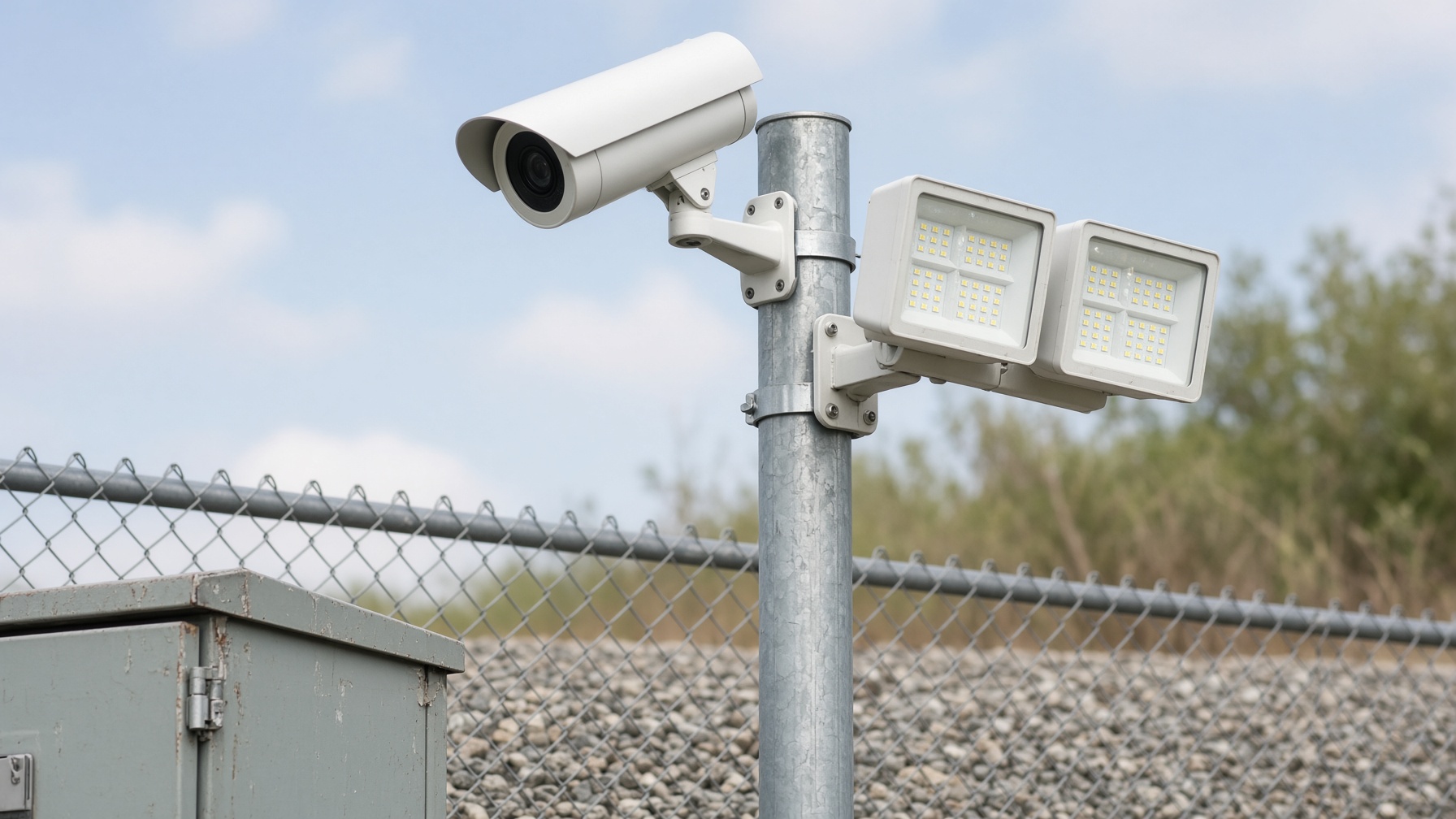
NERC’s physical-security standard, as FERC has reviewed it, applies to transmission stations and control centers whose loss could cause instability, uncontrolled separation, or cascading. That is the right problem to start with. It leaves a great deal of equipment outside the mandatory set.
The standard sorts. It looks for stations and control centers whose loss could split or collapse an interconnection, and it requires those sites to be identified and planned for. That is how a regulator avoids pretending every fence is one national project. It is also why "there is a standard" does not mean the yard nearest your house is inside the mandatory set.
Uncontrolled separation and cascading are words about a local loss becoming a regional or wider one. A neighborhood transformer does not fail in that way. It can still put a street in the dark, which is the outage people sit through. The map of cascade risk and the map of lived outages are both real, and they are not the same map.
Distribution yards and neighborhood transformers fail the public more often, from copper theft, vandalism, and weather. They are also easier to replace than a 500-kilovolt unit. The unrest risk and the cascade risk are not the same map.
Theft of copper and vandalism of common equipment are local crimes and local reliability problems. They are not, by themselves, a story about splitting an interconnection. Describing them as if they were a coordinated strike on several large stations makes the common crime sound like the end of the machine, and makes the rarer risk sound routine. The briefing owes people the distinction.
When a local outage follows damage at a small yard, the likely story is local. When several large stations fail together, the story is different, and officials owe the public that difference in the first briefing.
The first briefing is the one rumor will copy. A distribution yard damaged, common equipment being replaced, not a cascading event: that is a complete account. Several transmission stations out, a regional reliability problem: that is a different complete account. Officials who will not say which account they are in are inviting the public to draw the map the standard exists to draw for them.
Sources
- CIP-014-3 — Physical Security — North American Electric Reliability Corporation · the article this brief was written from
- Evaluation of the Physical Security Reliability Standard and Physical Attacks on the Bulk-Power System — Federal Energy Regulatory Commission
- Electromagnetic Pulse and Geomagnetic Disturbance — Cybersecurity and Infrastructure Security Agency
More in Unrest
- Attacks on substations are now a pattern in the public record
by: Andrew, Co-Founder at Blackout Briefing
- The 1977 New York blackout was a social failure on top of an electrical one
by: Andrew, Co-Founder at Blackout Briefing
- Rumor is the accelerant once the phones thin out
by: Andrew, Co-Founder at Blackout Briefing
Recent news
EMP
The civilian grid is still the soft target in a high-altitude pulseby: Andrew, Co-Founder at Blackout Briefing
CME
A Carrington-class storm is a when, not a science-fiction ifby: Andrew, Co-Founder at Blackout Briefing
Grid
Metcalf still explains the grid better than most white papersby: Andrew, Co-Founder at Blackout Briefing