
Grid · Saturday, October 10
Black start is the art of restarting a grid that is fully stopped
Bringing a dead interconnection back is a planned sequence. Losing the plants that can do it is a special kind of failure.
by: Andrew, Co-Founder at Blackout Briefing
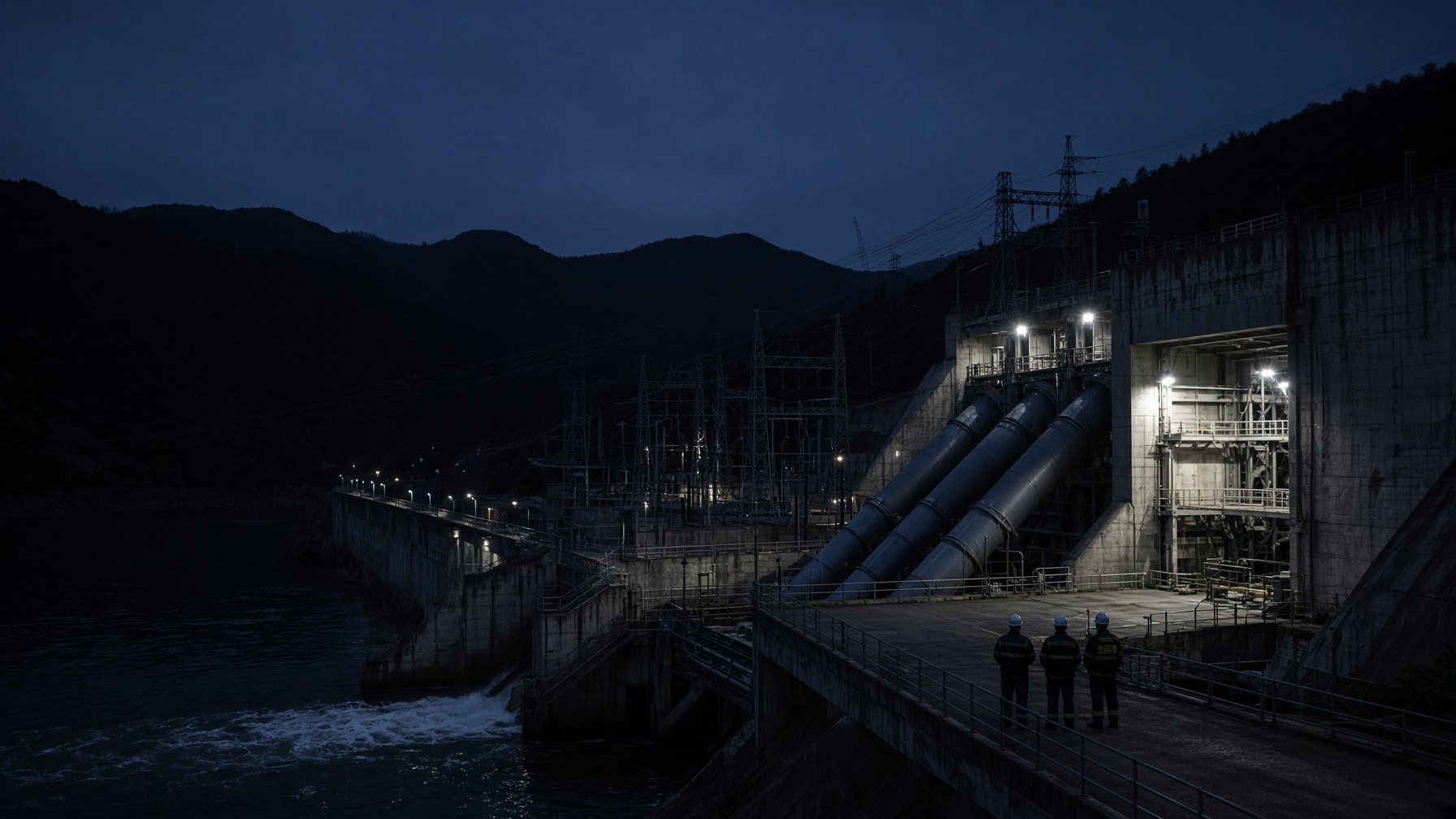
Most power plants need electricity to start. Black-start units are the exceptions that can come up on their own and then energize the next plant, and the next. The sequence is rehearsed, slow, and sensitive to which lines are intact.
A plant that is fully stopped cannot always flip itself on. Pumps, controls, and the systems that prepare the machine want station power. Black-start units are the ones with a way to make that first electricity without the grid they are about to rebuild. From there the sequence is a chain: this plant energizes that path, that path starts the next plant, and load is picked up carefully so the chain does not fall down.
A failure mode that damages those units, or the lines between them, does not just extend an outage. It removes the ladder. Geomagnetic and electromagnetic planning that ignores black start is only planning for the easy half of the problem.
The easy half is surviving the hour of the insult with as many units as possible still able to run. The hard half is the next day, if the interconnection is dark and the designated starters are among the damaged, or the lines out of them cannot be used. A plan that stops at ride-through has not answered how the lights come back when the ride fails.
Rehearsal is usually a tabletop or a carefully bounded test, because you do not casually darken a region to see if the pamphlet works. That limit is understood. It is also why a space-weather case has to be in the exercise on purpose. A drill that assumes one plant tripped and the neighbors are fine is a different drill.
Ask your state commission, sometime when the lights are on, whether the black-start plan has been exercised against a space-weather case. The answer is part of your actual risk.
The question is specific so the answer has to be specific. “We have a black-start plan” is the easy reply. A reply that says whether they have run it against a case with more than one starter unavailable, or against a geomagnetic case, tells you whether the ladder has been looked at. Write down what they say.
Sources
- Evaluation of the Physical Security Reliability Standard and Physical Attacks on the Bulk-Power System — Federal Energy Regulatory Commission · the article this brief was written from
- Electromagnetic Pulse and Geomagnetic Disturbance — Cybersecurity and Infrastructure Security Agency
More in Grid
- Metcalf still explains the grid better than most white papers
by: Andrew, Co-Founder at Blackout Briefing
- San Antonio’s hardening pilot is a template, not a finish line
by: Andrew, Co-Founder at Blackout Briefing
- Inverter-based resources changed where the grid can break
by: Andrew, Co-Founder at Blackout Briefing
Recent news
EMP
The civilian grid is still the soft target in a high-altitude pulseby: Andrew, Co-Founder at Blackout Briefing
CME
A Carrington-class storm is a when, not a science-fiction ifby: Andrew, Co-Founder at Blackout Briefing
Survival
The first seventy-two hours are a sequence, not a vibeby: Andrew, Co-Founder at Blackout Briefing