Grid · Sunday, October 18
San Antonio’s hardening pilot is a template, not a finish line
A base, a city, and a municipal utility are treating EMP and geomagnetic risk as a shared operating problem.
by: Andrew, Co-Founder at Blackout Briefing
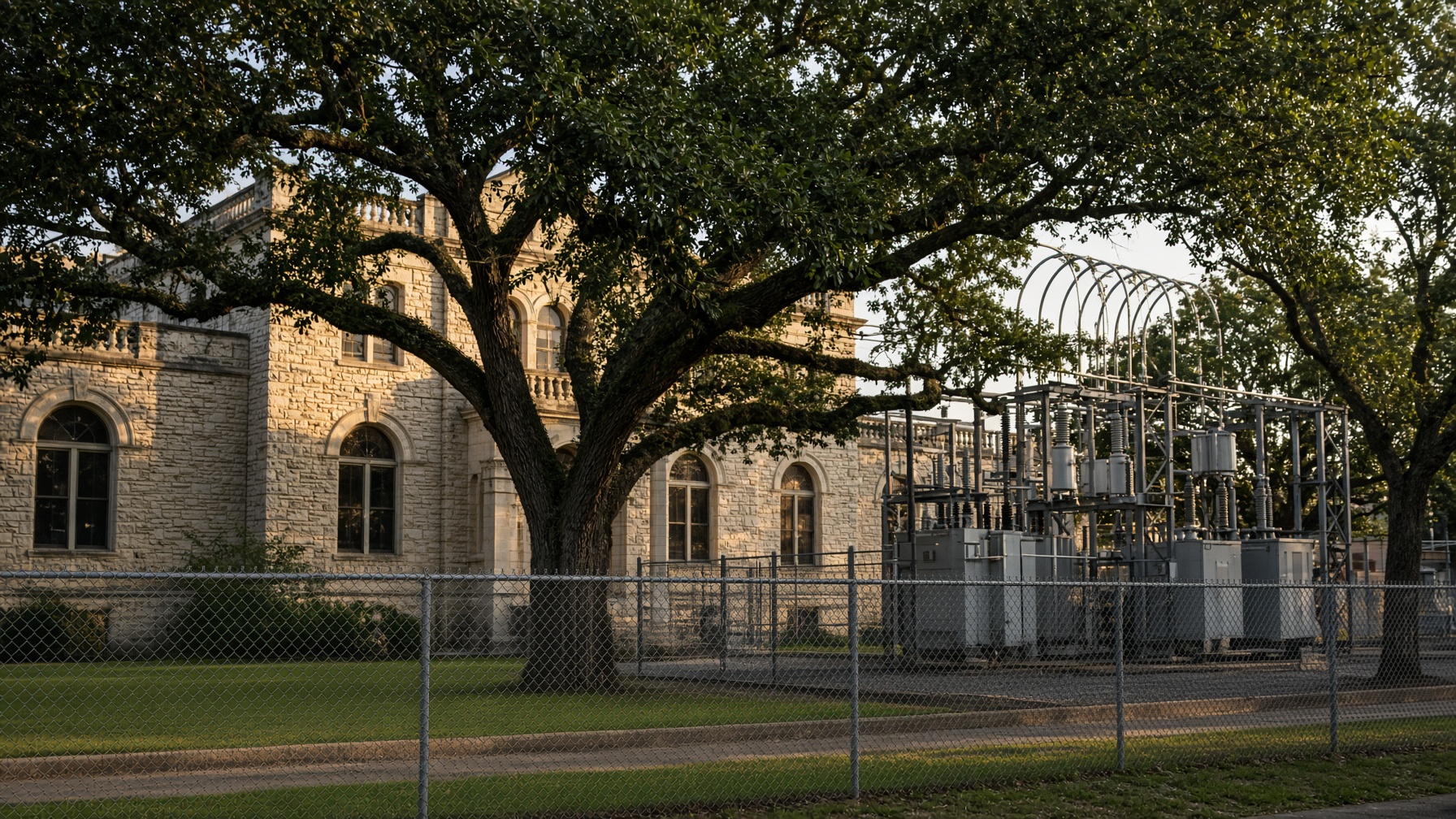
Around Joint Base San Antonio, local officials and the municipal utility have been building a regional answer to electromagnetic and geomagnetic risk: substation security, recovery playbooks, and a habit of sitting in the same room. The work tracks the 2019 executive order that told the federal government to coordinate national resilience to electromagnetic pulses.
A base does not stop being a customer of the city at the fence. The people who work there live on civilian water, civilian fuel, and civilian roads. Hardening inside the perimeter does not pump the surrounding system. The useful regional work starts from that dependence: security at yards, recovery steps written down, and the same people in the room before the event.
The useful part is not a press release. It is the admission that a base does not keep functioning if the city around it loses water and fuel. Hardening eleven substations does not harden a nation. It does show the shape of a project other regions can copy without waiting for a perfect federal design.
A shared room is a procedure. Playbooks and cameras still fail if the base, the city, and the municipal utility learn each other’s limits on the night. Sitting together in advance is how phone numbers, priorities, and the sentence “we cannot do that yet” get said early enough to matter.
Geomagnetic storms are the event planners can say, with a straight face, will happen. Man-made pulses are the low-probability case with the same damaged equipment at the end.
Eleven substations is a number a region can finish. A national design that never leaves draft form hardens nothing in the meantime. Other places can copy the shape — a priority list of yards, a recovery playbook, a utility willing to say what is still soft — without waiting for a template that fits every interconnection.
Planners do not have to settle which threat is more fashionable. A geomagnetic storm is the case they can say will happen. A man-made pulse is the rarer case that damages the same class of equipment. Practice the recovery on the storm. The pulse, if it ever has to be faced, inherits the same spares, cranes, and roster.
Sources
- Securing Against Possible Electromagnetic Pulse Attacks — AFCEA International · the article this brief was written from
- Evaluation of the Physical Security Reliability Standard and Physical Attacks on the Bulk-Power System — Federal Energy Regulatory Commission
- Electromagnetic Pulse and Geomagnetic Disturbance — Cybersecurity and Infrastructure Security Agency
More in Grid
- Metcalf still explains the grid better than most white papers
by: Andrew, Co-Founder at Blackout Briefing
- Inverter-based resources changed where the grid can break
by: Andrew, Co-Founder at Blackout Briefing
- Volt Typhoon is the cyber version of pre-positioning
by: Andrew, Co-Founder at Blackout Briefing
Recent news
EMP
The civilian grid is still the soft target in a high-altitude pulseby: Andrew, Co-Founder at Blackout Briefing
CME
A Carrington-class storm is a when, not a science-fiction ifby: Andrew, Co-Founder at Blackout Briefing
Survival
The first seventy-two hours are a sequence, not a vibeby: Andrew, Co-Founder at Blackout Briefing