
EMP · Friday, October 16
Cars are not universally dead. They are also not a plan.
Vehicle electronics are unevenly vulnerable. Betting the evacuation on every modern car still running is a bad bet.
by: Andrew, Co-Founder at Blackout Briefing
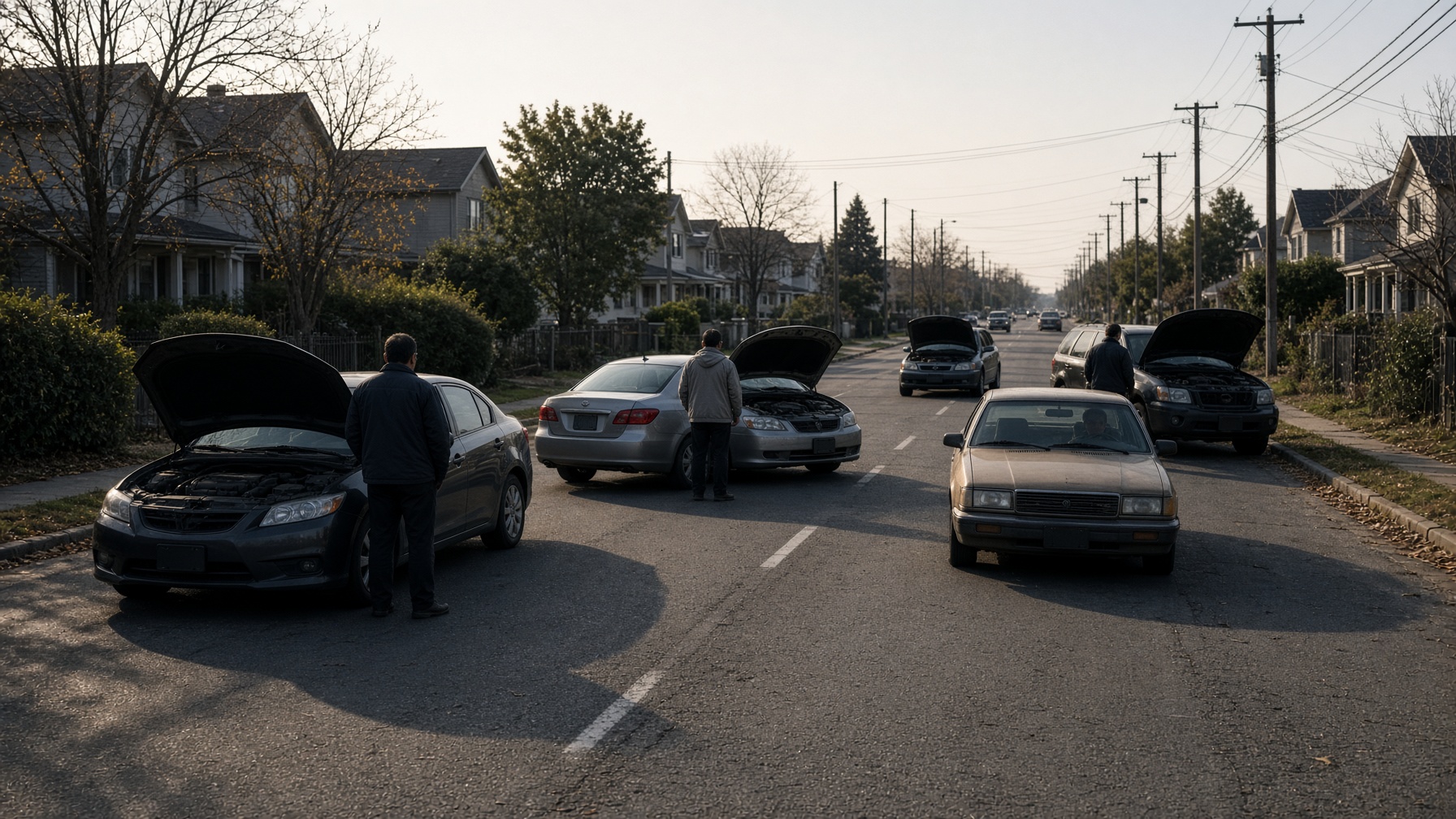
Popular briefings swing between “all cars die” and “cars are fine.” The test record is messier. Some vehicles tolerate harsh fields. Some stall, some glitch, some keep running. Age, design, and whether the engine was on all matter, and nobody has published a consumer reliability list you should trust.
The all-or-nothing briefings are popular because they tell you what to buy. The record does not. Vehicles in the same field have stalled, glitched, kept running, or shrugged the test off, depending on age, design, and whether they were on. Nobody has published a consumer list that sorts the driveway into safe and doomed. Treat any list that claims to as entertainment.
What you can plan is optionality. A household that can walk to water, or that keeps one older, simpler vehicle with a full tank, has more choices than a household whose only exit is a software-heavy car in a garage that no longer opens.
You will not get to choose whether the engine is running at the moment that matters, and you cannot see the design from the badge. Older and simpler is a hedge, not a certificate. A plan that needs every modern car to start has a single point of failure and no public test record behind it. Optionality is what you can actually arrange.
Do not start a mass evacuation because the sky did something strange. Roads kill people in the dark faster than a pulse does. Leave if you have a specific, nearer-term reason — fire, flood, a chemical plant — not because a thread told you to.
A garage door is a mundane electronic load. A car that would have run, behind a door that will not, is a car in a box. Know the manual release and try it once while the lights work. A full tank in one simpler vehicle is not a cross-country scheme. It is a local choice you still have. So is being able to walk to water if neither vehicle is the plan.
Dark signals, other drivers acting on the same rumor, and unlit roads are an ordinary way people get hurt. A strange sky is not a destination. Fire, rising water, or a chemical plant with a specific warning are destinations: they have a direction you can name in advance. Leave for those. Stay for a thread. If you leave, leave for the place already written down.
Sources
- Americans and the Electrical Grid Vulnerable to EMP — Foundation for Defense of Democracies · the article this brief was written from
- Electromagnetic Pulse and Geomagnetic Disturbance — Cybersecurity and Infrastructure Security Agency
- Executive Order 13865 — Coordinating National Resilience to Electromagnetic Pulses — The American Presidency Project
- Coordinating National Resilience to Electromagnetic Pulses — Federal Register
More in EMP
- The civilian grid is still the soft target in a high-altitude pulse
by: Andrew, Co-Founder at Blackout Briefing
- E1, E2, and E3 are not the same problem wearing three names
by: Andrew, Co-Founder at Blackout Briefing
- Congress keeps using the phrase blackout warfare. The hardware has not caught up.
by: Andrew, Co-Founder at Blackout Briefing
Recent news
CME
A Carrington-class storm is a when, not a science-fiction ifby: Andrew, Co-Founder at Blackout Briefing
Grid
Metcalf still explains the grid better than most white papersby: Andrew, Co-Founder at Blackout Briefing
Survival
The first seventy-two hours are a sequence, not a vibeby: Andrew, Co-Founder at Blackout Briefing