Grid · Thursday, October 15
Distribution cooperatives and big cities do not fail the same way
Rural long lines pick up more geomagnetic current. Dense cities fail harder when water and transit go.
by: Andrew, Co-Founder at Blackout Briefing
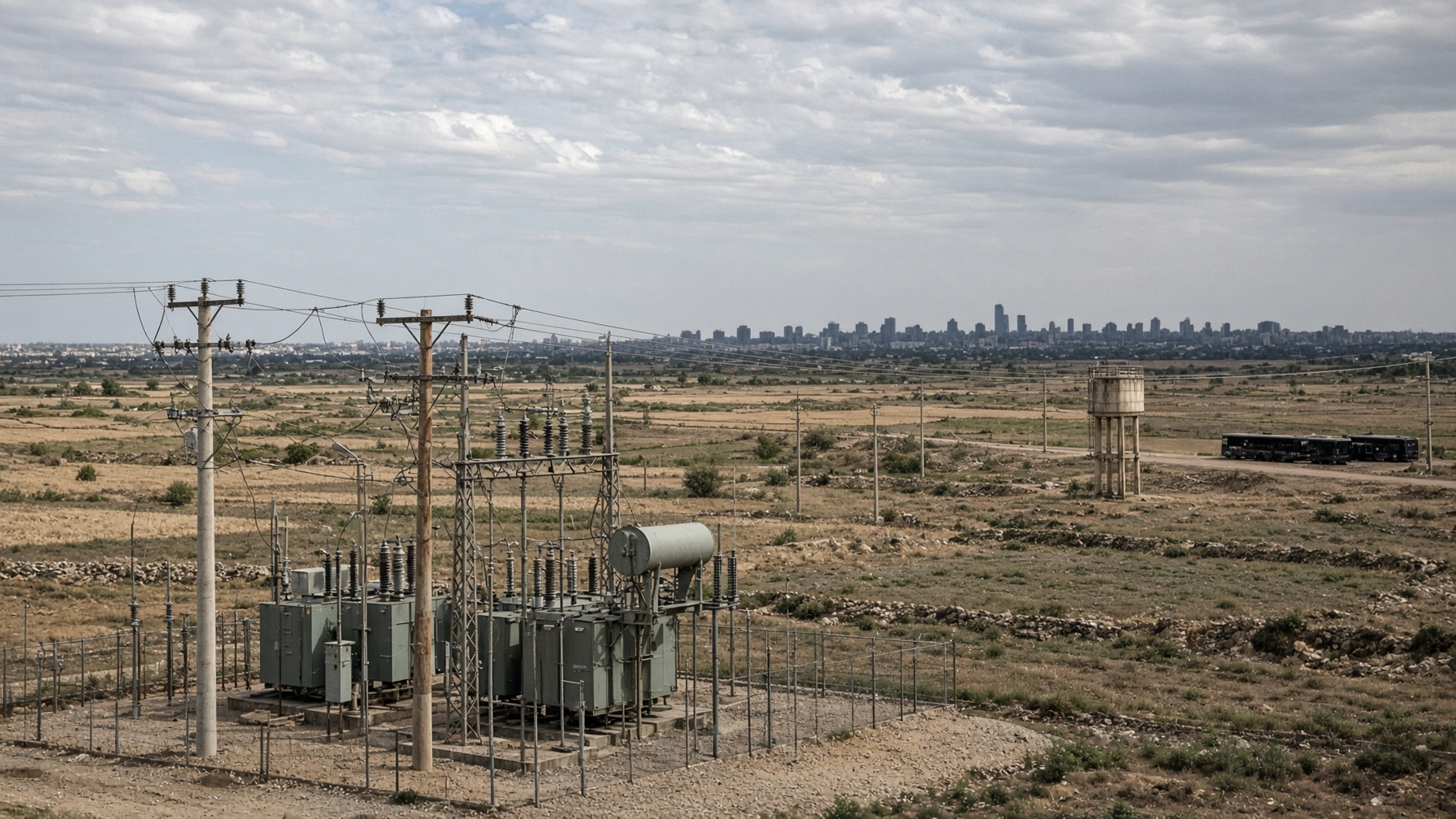
A geomagnetic storm couples best into long lines over resistive ground. That often means rural transmission, not the downtown network. A city blackout, when it comes, fails differently: vertical living, elevators, pumped water, transit, and a population that cannot heat or cool a house with a wood stove.
Long lines over resistive ground are good collectors of geomagnetic current. Downtown networks are a different shape: shorter runs, more paths, a poorer match for that particular antenna. They are not immune to ordinary failure. They are often the wrong place to look first for this storm. Rural transmission is where the coupling likes to show up. The city is where a blackout, once it arrives, is harder to live inside.
Preparedness advice copied from a homestead blog is incomplete in a high-rise, and homestead advice that ignores the transmission line at the edge of the county is incomplete too. The mechanism picks the victim.
Vertical buildings assume pumps and elevators the way a subdivision assumes a car. Water on an upper floor is a machine. Transit is how people move when they do not have a full tank in a driveway. A population that cannot heat or cool with a wood stove is not failing a character test. The building was never going to become a homestead because the power stopped.
Know which one you are. Then buy the tool that matches — a water plan and shoes, or a relationship with the cooperative that owns the long line.
The homestead list — heat you can tend, water you can reach, a truck — answers a rural problem and assumes land. The high-rise list — water you can carry, shoes for the stairs, a radio, a written plan — answers density and assumes someone else is dealing with the long line at the edge of the county. Each list goes wrong when it pretends to be universal. The mechanism picks the victim before the blog does.
If you live in the tower, the tools are a water plan and shoes, because walking may be the transit system. If you live on the cooperative’s lines, the tool is a relationship with that utility: how they notify members, and what they have already said they cannot spare. You do not have to adopt the other place’s equipment. You do have to know which failure you are actually in.
Sources
- Space Weather: An Overview of Policy and Select U.S. Government Roles (CRS R46049) — Congressional Research Service · the article this brief was written from
- Evaluation of the Physical Security Reliability Standard and Physical Attacks on the Bulk-Power System — Federal Energy Regulatory Commission
- Electromagnetic Pulse and Geomagnetic Disturbance — Cybersecurity and Infrastructure Security Agency
More in Grid
- Metcalf still explains the grid better than most white papers
by: Andrew, Co-Founder at Blackout Briefing
- San Antonio’s hardening pilot is a template, not a finish line
by: Andrew, Co-Founder at Blackout Briefing
- Inverter-based resources changed where the grid can break
by: Andrew, Co-Founder at Blackout Briefing
Recent news
EMP
The civilian grid is still the soft target in a high-altitude pulseby: Andrew, Co-Founder at Blackout Briefing
CME
A Carrington-class storm is a when, not a science-fiction ifby: Andrew, Co-Founder at Blackout Briefing
Survival
The first seventy-two hours are a sequence, not a vibeby: Andrew, Co-Founder at Blackout Briefing