
Grid · Saturday, October 17
Foreign hardware in the bulk system is a quiet access problem
An executive order on the bulk-power system treated some imported equipment as a supply-chain risk, not a trade footnote.
by: Andrew, Co-Founder at Blackout Briefing
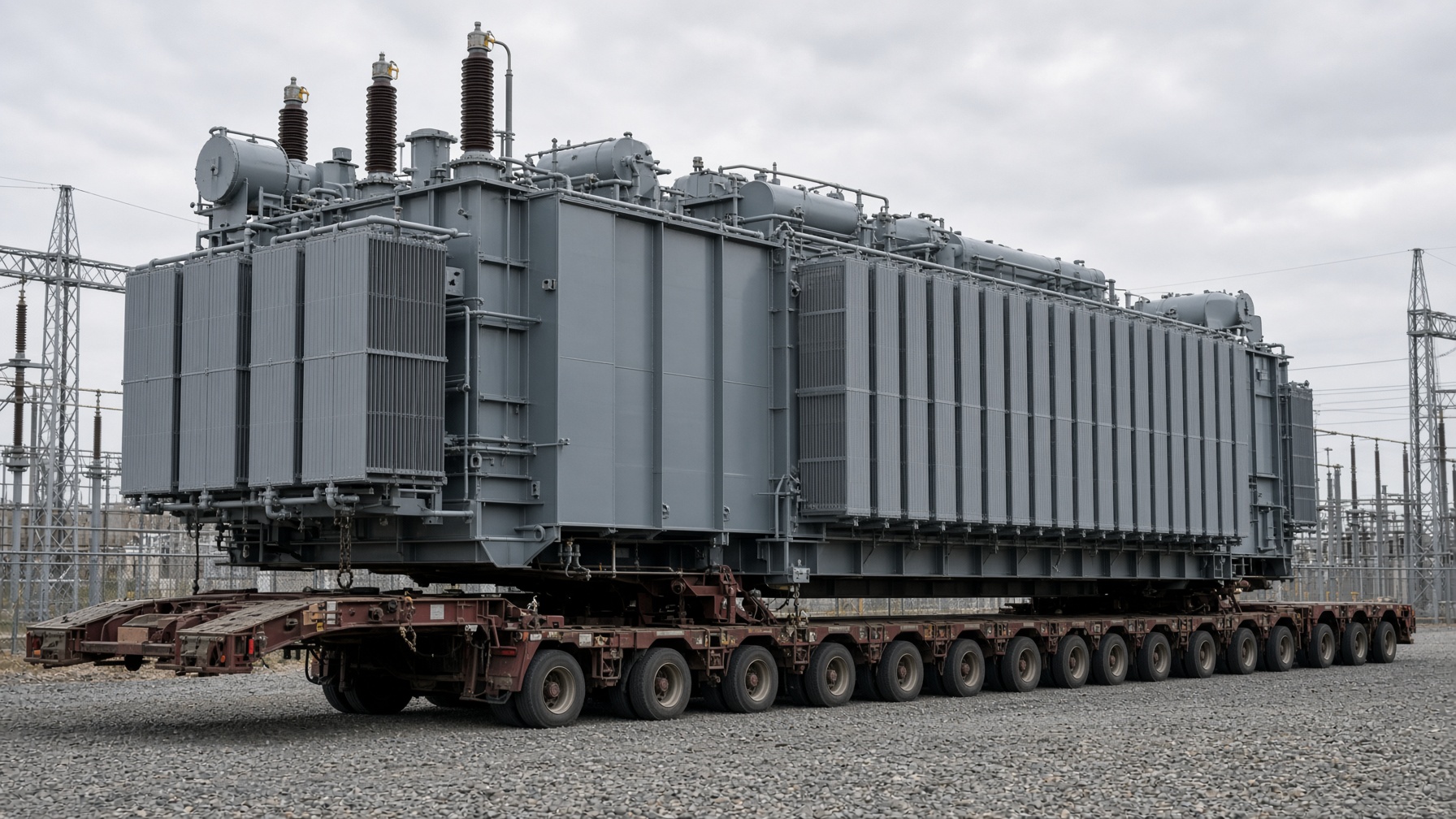
Transformers, inverters, and the communications gear wrapped around them are not neutral boxes. If a manufacturer in an adversary country can still talk to a device after it is installed — or can ship it with a path nobody documented — the grid has a remote control it did not mean to buy.
The unwanted control does not need a dramatic switch. It can be a maintenance path, an update channel, or a radio that was not on the drawing the buyer approved. The utility thought it purchased a transformer, an inverter, or the communications gear around them. It may also have purchased a conversation with a manufacturer in an adversary country. That path is quiet until someone uses it.
Reporting over the last two years has included cases of unexpected communication hardware in power electronics tied to Chinese suppliers. Utilities and the Department of Energy have treated that as a reason to know what is on the network, not as a reason to romanticize a fully domestic factory that does not yet exist.
The reported cases are a reason to inventory, not a reason to guess that every foreign box is a plot. Unexpected communication hardware is a fact a teardown can confirm and a packing slip can miss. A utility that cannot say which installed devices are able to talk outbound cannot decide which ones to watch. Knowing the network is a list, kept current, of what is actually in the yards.
Resilience here looks like procurement rules, teardown testing, and the unfashionable habit of disconnecting gear that phones home.
A fully domestic factory, if it is built later, does not rewrite the equipment already in service. Those units stay for a long time. Procurement rules can change the next purchase. They do not, by themselves, find a board that should not be there. Romantic talk about a plant that does not yet exist is a way to delay the inventory of the plant that is already energized.
Disconnecting gear that phones home is unfashionable because the device seemed to work, the vendor will argue, and the diagram has to be redrawn. Those are costs. An unexplained path into bulk-power equipment is a larger one. If it was not supposed to communicate, it does not get to keep a connection “just in case.” Document a real exception. Remove the rest.
Sources
- Securing the United States Bulk-Power System — Federal Register · the article this brief was written from
- PRC State-Sponsored Actors Compromise U.S. Critical Infrastructure (AA24-038A) — CISA, NSA, and FBI
- Electromagnetic Pulse and Geomagnetic Disturbance — Cybersecurity and Infrastructure Security Agency
More in Grid
- Metcalf still explains the grid better than most white papers
by: Andrew, Co-Founder at Blackout Briefing
- San Antonio’s hardening pilot is a template, not a finish line
by: Andrew, Co-Founder at Blackout Briefing
- Inverter-based resources changed where the grid can break
by: Andrew, Co-Founder at Blackout Briefing
Recent news
EMP
The civilian grid is still the soft target in a high-altitude pulseby: Andrew, Co-Founder at Blackout Briefing
CME
A Carrington-class storm is a when, not a science-fiction ifby: Andrew, Co-Founder at Blackout Briefing
Survival
The first seventy-two hours are a sequence, not a vibeby: Andrew, Co-Founder at Blackout Briefing