Grid · Tuesday, October 13
Protective relays can save a transformer by blacking you out
A trip is sometimes the equipment choosing to survive. It still looks like a failure from the kitchen.
by: Andrew, Co-Founder at Blackout Briefing
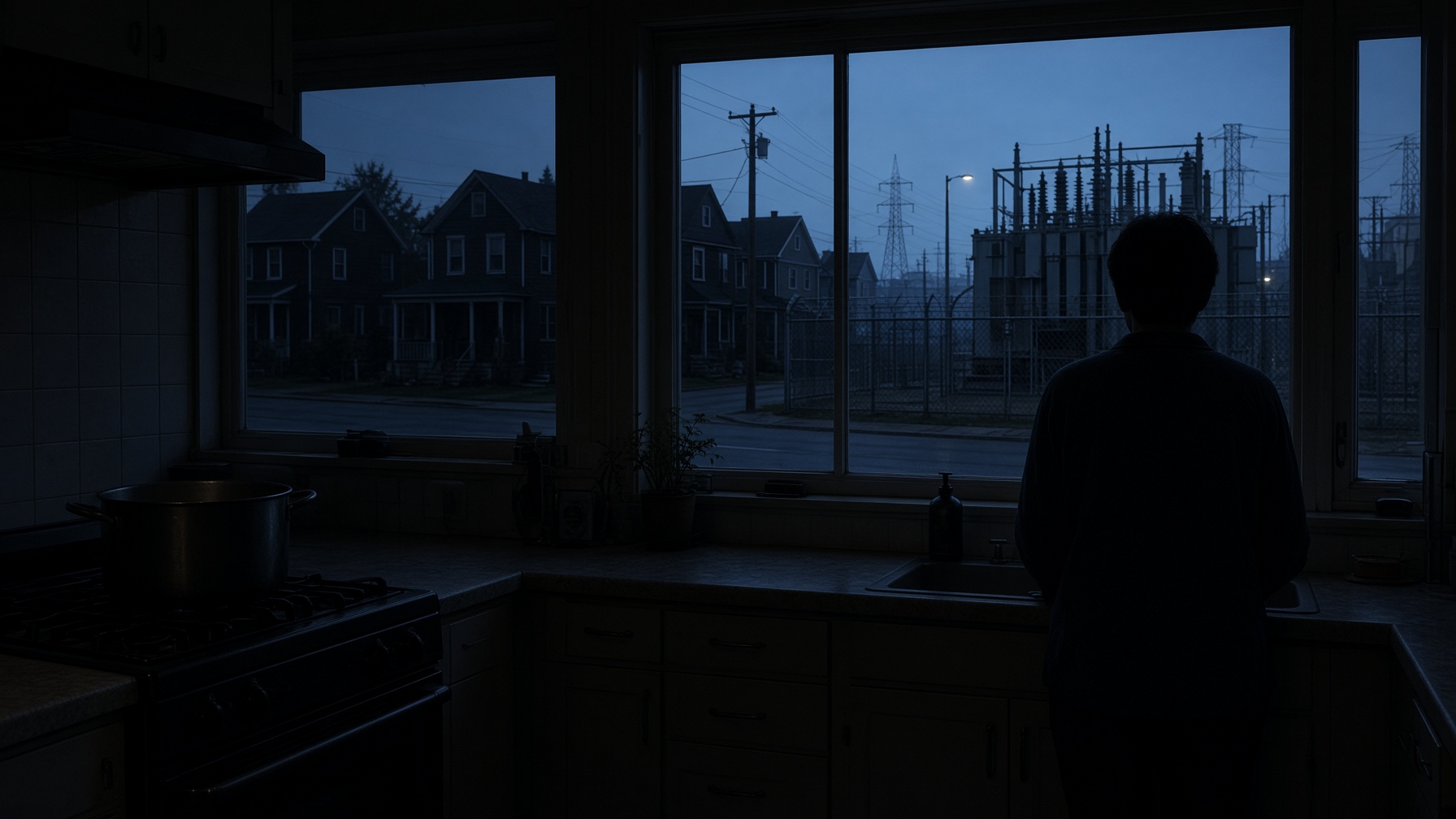
Geomagnetically induced current heats transformers and creates harmonics that protection systems are built to notice. Sometimes the right action is to take a line or a unit offline before it is destroyed. Customers experience that as an outage and, understandably, as a utility failure.
Relays do not have a public-relations setting. They compare what they see — current, harmonics, temperature where it is measured — to a setting chosen in calmer weather. If the setting says trip, the breaker opens. From the kitchen, the refrigerator stops and nobody on the block can see the unit that was about to cook itself.
Operators are stuck between two bad headlines: a two-hour trip that protected a unit you cannot replace, or a heroic attempt to hold voltage that ends in a wrecked transformer and a two-month outage. The procedures for that choice should be public enough that a deliberate trip is not mistaken for incompetence.
The choice is worse when the storm is still building. Taking equipment off early can look like an overreaction if the aurora fades. Leaving it on can look like negligence if the unit is damaged. A written procedure, exercised, is how a control room survives both headlines.
Customers can tell the difference only if someone says so. “We took this line out to keep the transformer” is a sentence a person can repeat to a neighbor. Silence, or a vague note about system conditions, teaches people that the utility is guessing.
If your utility explains a space-weather trip in plain language, that is a sign of a grown-up control room. Save the explanation. You will want it the next time the sky is active.
Save it because the next event will come with the same rumor: that the outage was a mistake, or a cover, or a drill nobody announced. A plain explanation from the last time is a reference. It tells you what a deliberate trip sounded like when your lights were the ones that went out.
Sources
- Vulnerability of Power Generation Critical Systems Against Electromagnetic Threats — Oak Ridge National Laboratory / OSTI · the article this brief was written from
- Evaluation of the Physical Security Reliability Standard and Physical Attacks on the Bulk-Power System — Federal Energy Regulatory Commission
- Electromagnetic Pulse and Geomagnetic Disturbance — Cybersecurity and Infrastructure Security Agency
More in Grid
- Metcalf still explains the grid better than most white papers
by: Andrew, Co-Founder at Blackout Briefing
- San Antonio’s hardening pilot is a template, not a finish line
by: Andrew, Co-Founder at Blackout Briefing
- Inverter-based resources changed where the grid can break
by: Andrew, Co-Founder at Blackout Briefing
Recent news
EMP
The civilian grid is still the soft target in a high-altitude pulseby: Andrew, Co-Founder at Blackout Briefing
CME
A Carrington-class storm is a when, not a science-fiction ifby: Andrew, Co-Founder at Blackout Briefing
Survival
The first seventy-two hours are a sequence, not a vibeby: Andrew, Co-Founder at Blackout Briefing