Grid · Friday, October 9
SCADA is the nervous system. It is also a target.
The control network that lets a handful of operators run a region is the same network an intruder wants.
by: Andrew, Co-Founder at Blackout Briefing
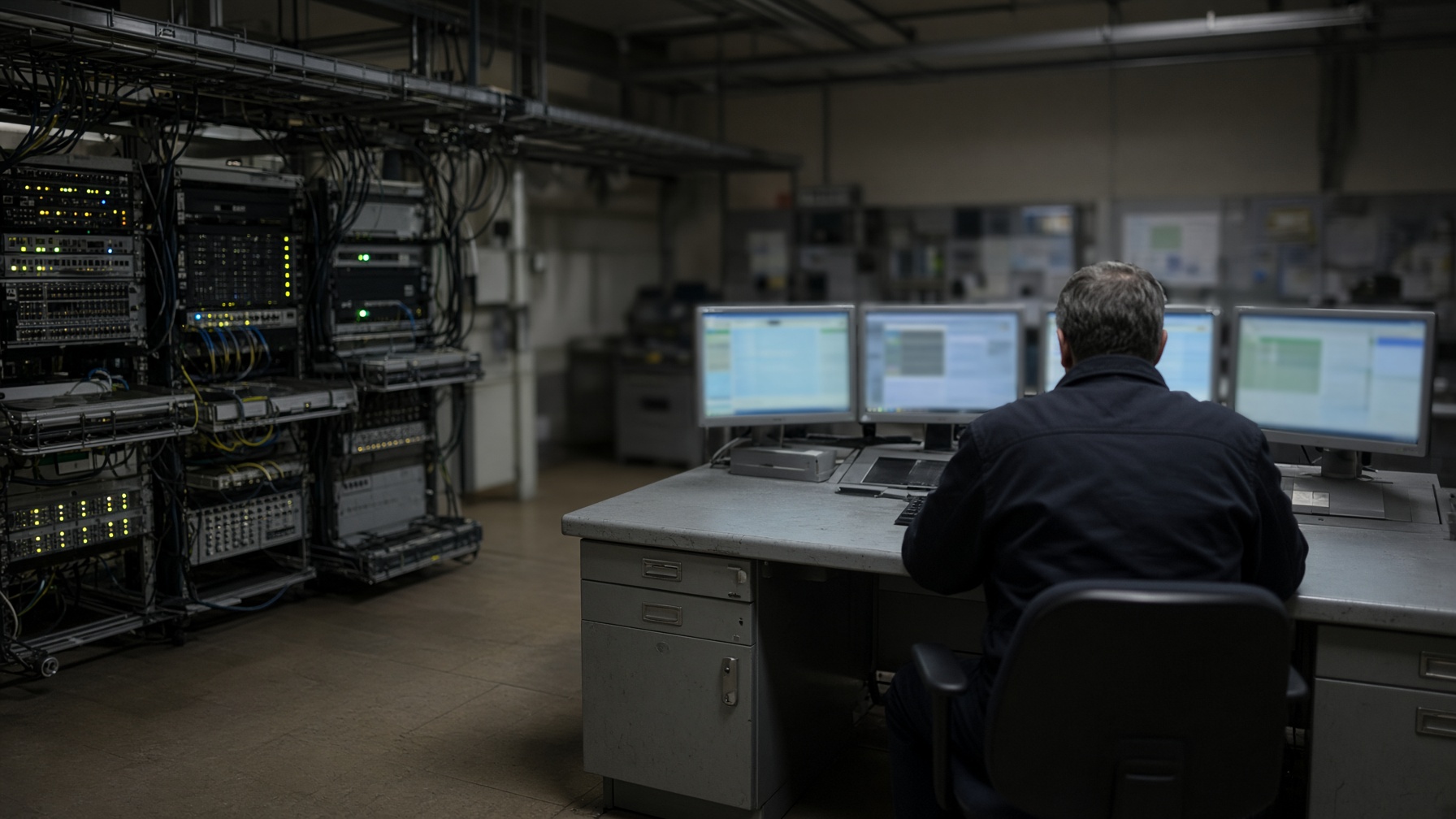
Supervisory control and data acquisition systems are how a modern grid is run: remote status, remote switching, alarms when a transformer looks wrong. They are also software, sitting on networks that have spent twenty years being connected to things they used to be isolated from.
A handful of operators can run a region because the region reports itself. Breaker position, voltage, and alarms arrive on a screen, and a command can go back out. That concentration is useful, and it is a risk. The network that carries the picture used to be more isolated. It has been joined, over those years, to other systems and to paths that were not part of the original control design.
An electromagnetic event that destroys sensors and a cyber event that lies about sensors can look similar from a control room that has stopped trusting its picture. Procedures for “what if the screen is wrong” are as important as procedures for “what if the screen is right and the current is high.”
Destroyed sensors go quiet or absurd. A cyber intrusion can go quiet, or it can look plausible and be false. At the first minute the operator’s problem is the same: the picture and the physical grid may have come apart. A procedure for that minute says what to trust next — a call to a field crew, a local reading, a conservative trip — rather than waiting for the screen to recover its manners.
High current with a true screen is the geomagnetic problem in its honest form. A wrong screen is a different procedure that can end in the same place, a deliberate outage, if the safe assumption is that the equipment should not be left to guess. Writing both down is how a control room avoids inventing a philosophy under alarm.
None of this is a reason to romanticize a fully manual grid. It is a reason to keep the manual as a practiced fallback, not a PDF.
Manual operation does not return by nostalgia. The grid is larger than the one those habits were built for, and the people who ran it that way have been leaving the trade. A fallback that has not been practiced is a document in a drawer. Practice means crews who have operated the equipment without the screen, on a schedule, while the screen still works. The control system should stay. The point of calling it a target is to know what the operators will do on the day it lies or goes blank, and to have done a lesser version of that day already.
Sources
- PRC State-Sponsored Actors Compromise U.S. Critical Infrastructure (AA24-038A) — CISA, NSA, and FBI · the article this brief was written from
- Electromagnetic Pulse and Geomagnetic Disturbance — Cybersecurity and Infrastructure Security Agency
More in Grid
- Metcalf still explains the grid better than most white papers
by: Andrew, Co-Founder at Blackout Briefing
- San Antonio’s hardening pilot is a template, not a finish line
by: Andrew, Co-Founder at Blackout Briefing
- Inverter-based resources changed where the grid can break
by: Andrew, Co-Founder at Blackout Briefing
Recent news
EMP
The civilian grid is still the soft target in a high-altitude pulseby: Andrew, Co-Founder at Blackout Briefing
CME
A Carrington-class storm is a when, not a science-fiction ifby: Andrew, Co-Founder at Blackout Briefing
Survival
The first seventy-two hours are a sequence, not a vibeby: Andrew, Co-Founder at Blackout Briefing