Grid · Thursday, October 8
The Eastern Interconnection is one machine
A failure can cascade across state lines because the wires do. Restoration has to be just as collective.
by: Andrew, Co-Founder at Blackout Briefing
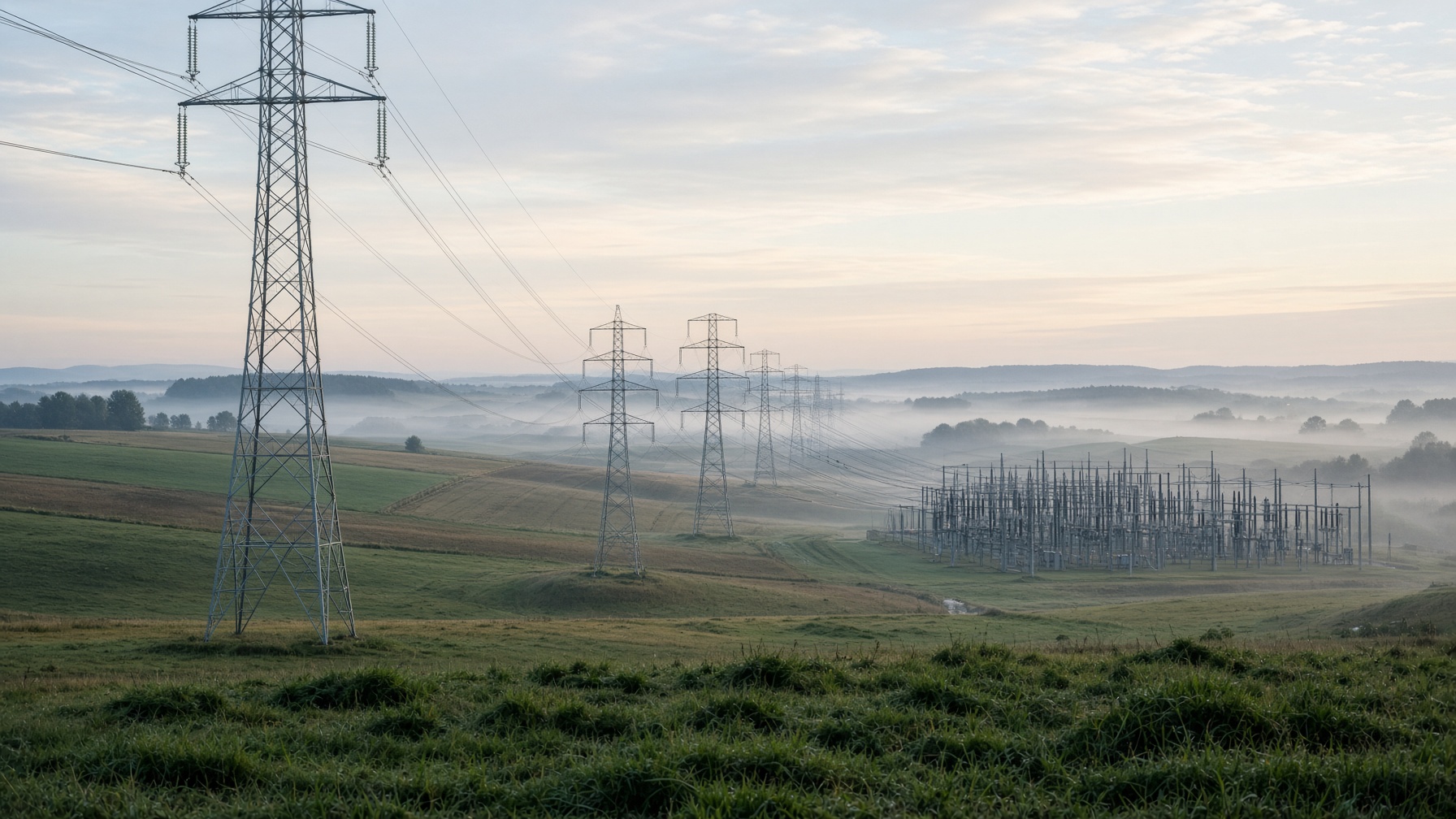
The Eastern Interconnection ties utilities from the Atlantic to the Rockies into one synchronized machine. That is an engineering triumph and a shared fate. Protective schemes exist precisely because a local fault can otherwise become everyone’s fault.
Synchronized means the machines share a frequency. A plant does not keep a private heartbeat. When that frequency is in trouble, the trouble is felt across a vast set of utilities at once. The schemes that trip equipment on purpose are there so a local fault does not get to write the regional outcome.
The boundary matters as much as the size. This is one machine, with edges, not a slogan for every wire on the continent. Other large interconnections sit beside it and are not the same clock. A bad day in the East can be enormous and still not be a single national light switch.
Electromagnetic and geomagnetic stress does not respect the branding on your bill. The operator who matters may be a reliability coordinator you have never heard of. When they order a conservative posture, your local utility is not freelancing.
A conservative posture can mean taking load or equipment out before it fails in a worse way. From the street that can look like the company causing the outage. Inside the machine it is an attempt to keep a local stress from becoming everybody's. The coordinator's map is wider than the logo on the truck.
Putting the machine back together is collective for the same reason. You do not light a dead region from whichever corner is convenient and hope the frequencies agree. The path is a sequence the utilities share. A state plan with no neighbors in it is a plan for an island the wires do not provide.
Interstate problems need interstate spares and interstate drills. State-only plans are how a synchronized grid gets an uncoordinated recovery. The equipment does not sit inside a legislature. The crews will notice, if the first time they are supposed to cross a line is the day they have to.
Sources
- Evaluation of the Physical Security Reliability Standard and Physical Attacks on the Bulk-Power System — Federal Energy Regulatory Commission · the article this brief was written from
- Electromagnetic Pulse and Geomagnetic Disturbance — Cybersecurity and Infrastructure Security Agency
More in Grid
- Metcalf still explains the grid better than most white papers
by: Andrew, Co-Founder at Blackout Briefing
- San Antonio’s hardening pilot is a template, not a finish line
by: Andrew, Co-Founder at Blackout Briefing
- Inverter-based resources changed where the grid can break
by: Andrew, Co-Founder at Blackout Briefing
Recent news
EMP
The civilian grid is still the soft target in a high-altitude pulseby: Andrew, Co-Founder at Blackout Briefing
CME
A Carrington-class storm is a when, not a science-fiction ifby: Andrew, Co-Founder at Blackout Briefing
Survival
The first seventy-two hours are a sequence, not a vibeby: Andrew, Co-Founder at Blackout Briefing