EMP · Thursday, October 15
The ninety-percent figure is a scenario, not a measurement
Commission-era estimates of mass death assume a year-long national blackout. They are a warning about duration, not a prophecy.
by: Andrew, Co-Founder at Blackout Briefing
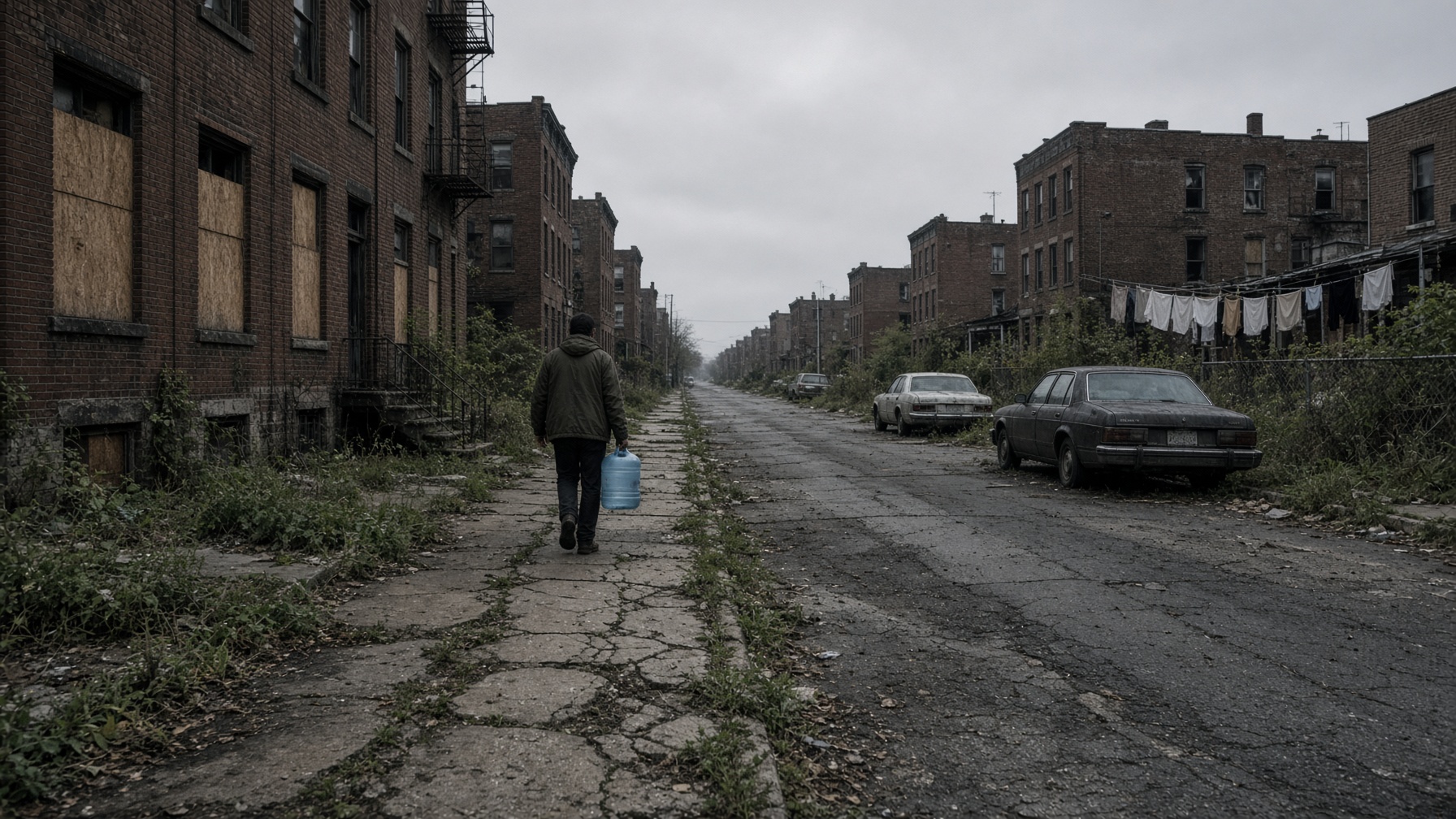
For years, testimony associated with the Congressional EMP Commission has included a stark estimate: a blackout lasting about a year could kill a huge majority of Americans through starvation, disease, and social collapse. Former officials have echoed versions of it. It circulates because it is vivid.
The estimate circulates because a huge majority, dead over about a year, is easy to remember and hard to file. The mechanism in the testimony is not the pulse as a direct injury. It is starvation, disease, and social collapse after a blackout that long, across a country that no longer has the systems it assumes. Detach the percentage from those assumptions and it becomes a prophecy. It was offered as a scenario.
Read it as a statement about duration and dependence, not as a body count already booked. Shorter outages, partial grids, and competent local response change the result completely. Longer ones, with fuel and water systems down across many states at once, start to look like the scenario.
Duration is the variable that changes the picture completely. Shorter outages and partial grids leave paths for food, fuel, and mutual aid. Competent local response — utilities, hospitals, water plants, neighbors — changes a bad month into a different outcome than a year with those systems down across many states at once. The scenario starts to look like itself only when that wider, longer failure is what you assume.
The useful response is to argue about the assumptions in public — food stocks, mutual aid, transformer logistics — instead of treating the percentage as weather.
A body count is what records show after an event. A scenario is a test of assumptions before one. Treating the figure as weather, already booked, teaches fatalism. Fatalism is a poor reason to stage spares or to keep a water plant able to run. If the result is declared inevitable, the logistics questions sound naive. They are the questions that decide whether the scenario’s assumptions hold.
Argue the assumptions in public, in boring units. How much food is actually in reach of a city. Which neighbors can still move fuel if one region is dark. How long the transformer queue is, and whether mutual aid has anything to loan. Those are arguments. The percentage is not a forecast you dress for. It is a warning about how bad the duration has to be before the dependence matters that much.
Sources
- Commission to Assess the Threat to the United States from Electromagnetic Pulse Attack — EMP Commission · the article this brief was written from
- Electromagnetic Pulse and Geomagnetic Disturbance — Cybersecurity and Infrastructure Security Agency
- Executive Order 13865 — Coordinating National Resilience to Electromagnetic Pulses — The American Presidency Project
- Coordinating National Resilience to Electromagnetic Pulses — Federal Register
More in EMP
- The civilian grid is still the soft target in a high-altitude pulse
by: Andrew, Co-Founder at Blackout Briefing
- E1, E2, and E3 are not the same problem wearing three names
by: Andrew, Co-Founder at Blackout Briefing
- Congress keeps using the phrase blackout warfare. The hardware has not caught up.
by: Andrew, Co-Founder at Blackout Briefing
Recent news
CME
A Carrington-class storm is a when, not a science-fiction ifby: Andrew, Co-Founder at Blackout Briefing
Grid
Metcalf still explains the grid better than most white papersby: Andrew, Co-Founder at Blackout Briefing
Survival
The first seventy-two hours are a sequence, not a vibeby: Andrew, Co-Founder at Blackout Briefing