Grid · Monday, October 12
Wildfire shutoffs taught utilities how to turn the grid off on purpose
Public-safety power shutoffs are unpopular and, sometimes, the least-bad option. Space weather may need the same muscle.
by: Andrew, Co-Founder at Blackout Briefing
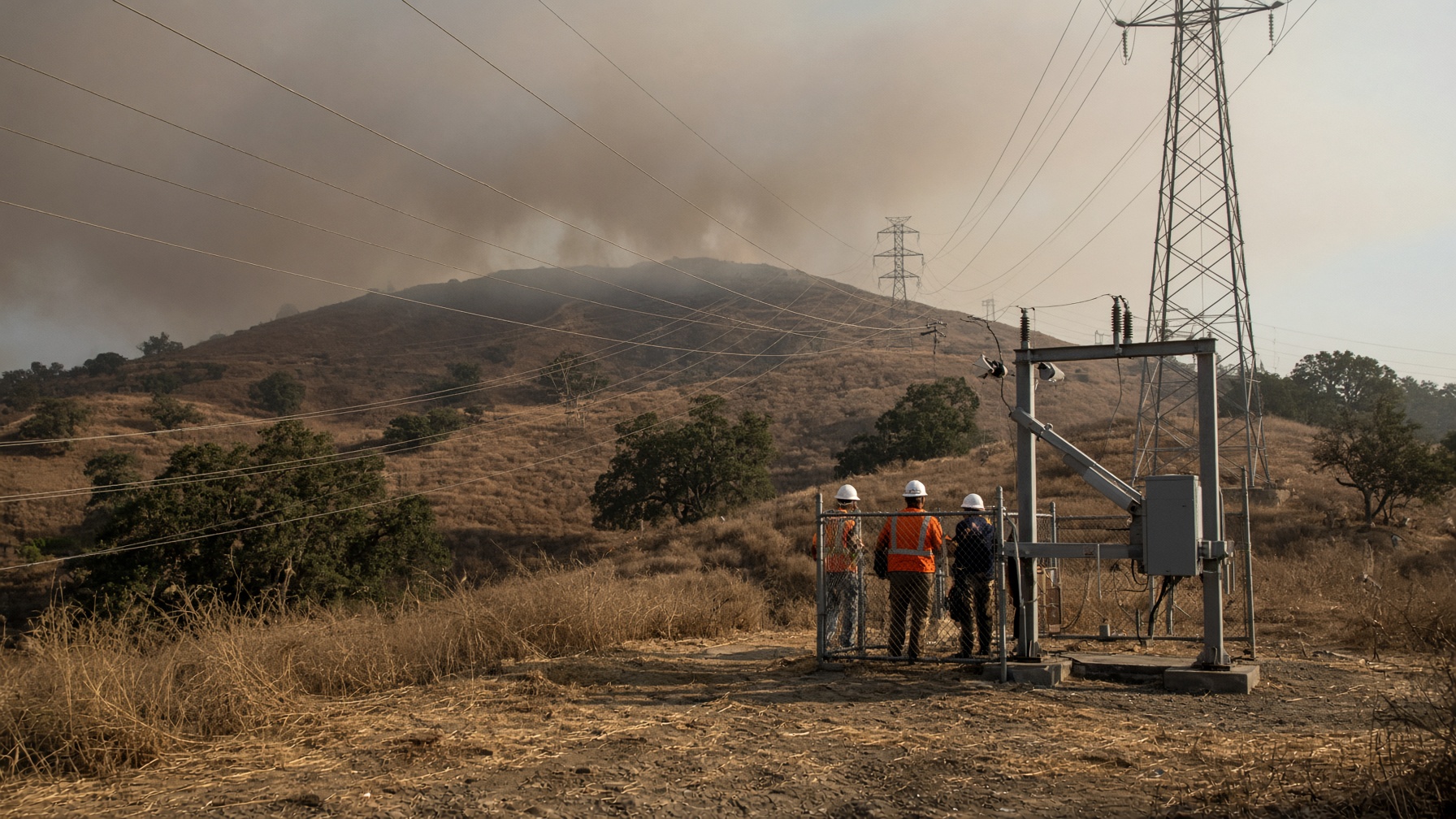
Utilities in fire country now de-energize lines on purpose when wind and fuel make ignition likely. Customers hate it. Regulators tolerate it because the alternative is a camp fire started by a spark. The institutional skill — legal authority, customer warning, medical registries — took years to build.
The skill is not the switch. It is everything around the switch: who may order it, how the notice goes out, which customers are on a medical list, and how the utility talks to them while the lines are still hot. That apparatus was argued in public, revised, and still makes people angry. It exists.
A severe geomagnetic watch needs a cousin of that skill: the authority to reconfigure or de-energize before equipment is destroyed, with the same duty to warn people who depend on powered medical gear.
Reconfiguration can mean opening lines, changing how neutrals are handled, or parking vulnerable units where the procedure says to park them. De-energizing is the blunter tool. Both look, from a kitchen, like the utility chose your outage. The warning duty is how that choice is kept from becoming a surprise for someone on a concentrator.
Space weather gives less of the sensory cue that wind provides. People can see a red-flag day. They cannot see induced current. The warning has to carry the explanation the wildfire shutoff learned to put in the first sentence: this is on purpose, this is the window, this is what to do if you need power to stay alive.
The politics will be rough. The alternative is discovering the limit of a transformer in public.
Rough politics are not a reason to skip the authority until the week it is needed. A procedure invented during the storm will be fought over anyway, and it will be worse. The fire-country record is the precedent sitting in plain view: unpopular, pre-written, and aimed at a damage that cannot be walked back.
Sources
- Evaluation of the Physical Security Reliability Standard and Physical Attacks on the Bulk-Power System — Federal Energy Regulatory Commission · the article this brief was written from
- Electromagnetic Pulse and Geomagnetic Disturbance — Cybersecurity and Infrastructure Security Agency
More in Grid
- Metcalf still explains the grid better than most white papers
by: Andrew, Co-Founder at Blackout Briefing
- San Antonio’s hardening pilot is a template, not a finish line
by: Andrew, Co-Founder at Blackout Briefing
- Inverter-based resources changed where the grid can break
by: Andrew, Co-Founder at Blackout Briefing
Recent news
EMP
The civilian grid is still the soft target in a high-altitude pulseby: Andrew, Co-Founder at Blackout Briefing
CME
A Carrington-class storm is a when, not a science-fiction ifby: Andrew, Co-Founder at Blackout Briefing
Survival
The first seventy-two hours are a sequence, not a vibeby: Andrew, Co-Founder at Blackout Briefing